Module 3. Friends and family All ages
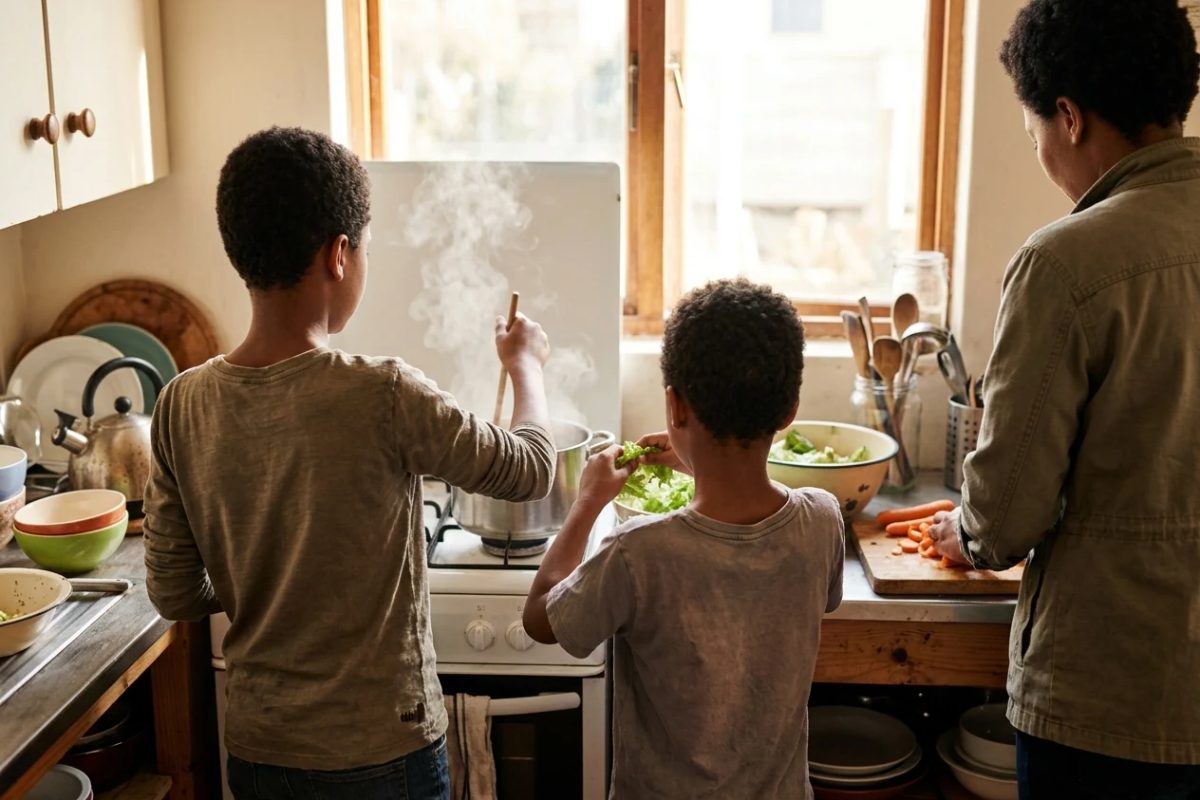
All kinds of families
Every family looks different. A family is the people who care for you.
Draft. The BELIEVE team is still checking this page.
Imagine your class all drew their families. You'd get a wall full of different pictures.
One drawing has a mum, a dad and three sisters. One has a gran and a dog. One has two dads. One has a mum, a stepdad and a baby on the way.
Someone draws two homes, one for each parent. Someone draws a foster carer. Someone draws a whole street of cousins.
Every one of those is a real family.
What counts as a family?
The people who look after you and care about you. They might be related to you or not. They might live with you or not.
Some families are big and noisy. Some are just two people. Some change over time.
Why are families so different?
Families grow in lots of ways. People meet, split up, move, get ill or need help. So families end up all shapes and sizes. There's no one normal family. Around the world, some people live with one parent and some with two. Lots live with grandparents, aunts and cousins too.
The UN has rules on the rights of young people. They say your rights are the same, whoever your family is.
What if someone asks about my family?
People are often just curious. You get to choose how much to share.
- Keep it short. "I live with my nan." That's enough.
- Say if you'd rather not. "I don't really want to talk about it." That's fine.
- Change the subject. "Anyway, did you see that goal?"
- Tell a grown-up if it's unkind. Making fun of someone's family again and again is bullying.
How can I be kind about other families?
Try asking instead of guessing. Not everyone has a mum, a dad or a big home. A guess can land on a sore spot without you knowing.
"Who do you live with?" is kinder than "What does your dad do?"
On days like Mother's Day or Father's Day, some people feel left out. Everyone else is making cards, and they might not have that person. A quiet "You OK?" can help.
Listen when people talk about their family. Every story is worth hearing.
Easy to get wrong
- Thinking your family is the "right" one. It's just yours.
- Asking nosy questions in front of everyone. Ask quietly, or not at all.
- Feeling ashamed of your family. Every family has good bits and hard bits.
Everyone starts from a different place
Some people live with parents. Some live with grandparents, foster carers or in a care home. Some have a parent who's away, ill or no longer alive. Some families have lots of money and some have very little. Every one of those is a real start.
If talking about your family feels hard, start smaller. Draw it just for you. Or tell one person you trust about the people who matter to you.
Questions you might have
Do I have the same rights whatever my family is like?
Yes. The UN Convention on the Rights of the Child says every young person keeps their rights. That's true whoever their parents are and whatever their family believes or does.
What if I live in two homes?
Lots of people do. Two sets of rules and two toothbrushes take getting used to. Keeping a favourite thing in both places can help. Tell your grown-ups what works and what doesn't.
What is foster care?
Foster carers look after young people who can't live with their own family. It might be for a while or for longer. Foster families are real families too. Every young person in care has the same rights as anyone else.
What if people tease me about my family?
That's unkind and it isn't your fault. If it keeps happening, tell a grown-up you trust. Around the world, nearly 1 in 3 students say they were bullied at school in the last month. Help is out there.
What if I don't know one of my parents?
Your feelings about it are all OK. You might feel curious, sad or nothing much at all. Talking to a grown-up you trust can help. You can also find a free helpline at findahelpline.com.
What if I'm adopted?
Adopted families are real families. Some people know a lot about where they were born. Some know a little. You can ask questions when you're ready. The UN rules say your views count on things that affect you.
Related topics
Brothers, sisters and sharing a home · When things change at home · People who are different from you · Your trusted adults · Getting on with parents and carers
Collect the Everyone counts cards8 cards for this rule. Tap, try it, collect it.See the cardsSources
- UNICEF, "Children's version of the Convention on the Rights of the Child", articles 2, 12, 20 and 21, checked November 2026
- UNESCO, "Behind the numbers: ending school violence and bullying", 2019
- UN News, "New UN bullying report calls for 'safe, inclusive' schools for all children", 22 January 2019
- Find A Helpline, free helplines in over 175 countries, run by ThroughLine, checked November 2026
This is part of Everyone counts, one of the 7 BELIEVE rules. Article 31 of 191.