Module 3. Friends and family All ages
Living in two homes
Two homes can feel odd at first. A few small tricks make it feel like yours.
Draft. The BELIEVE team is still checking this page.
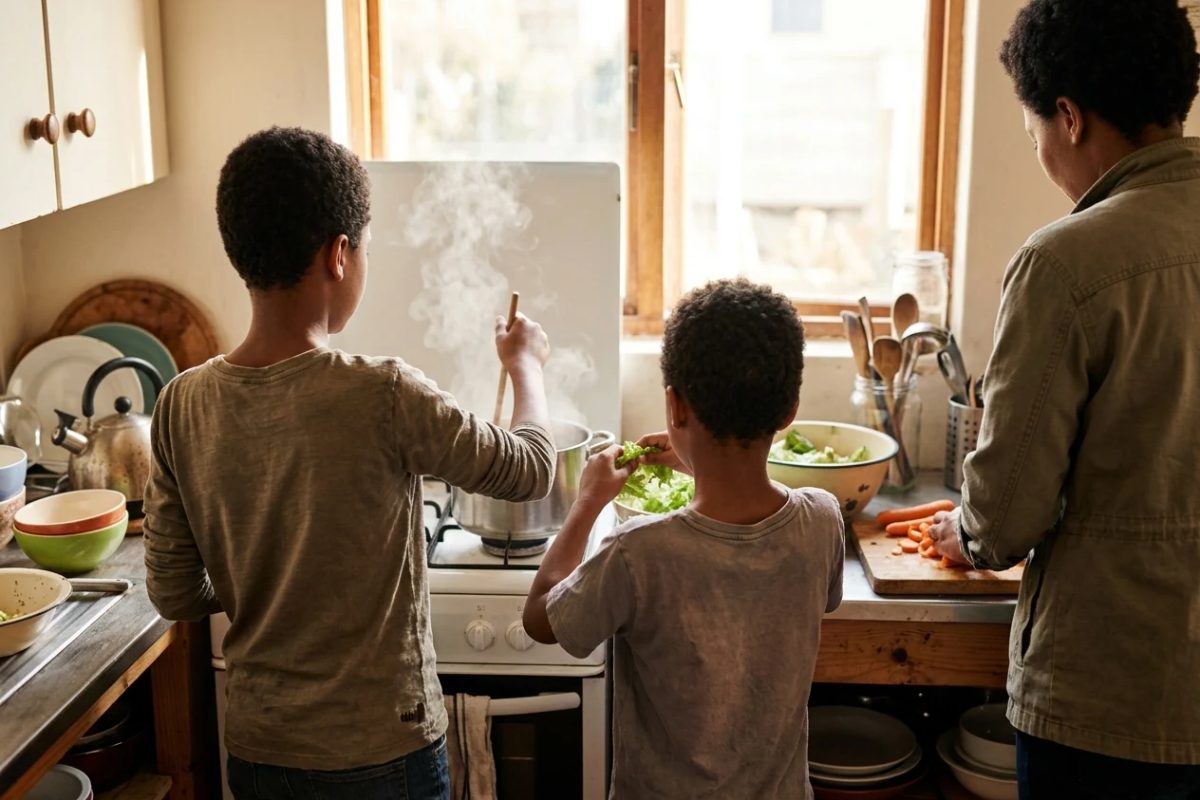
It's Friday after school. Your bag is packed for the other home.
You get there and unzip it. Pyjamas, yes. Toothbrush, yes. Your reading book? Still on the bed at the other place.
"Not again!"
Lots of people live in two homes. Some swap every week. Some go at weekends. Here's how to make it easier.
Why does it feel so strange at first?
Your brain likes knowing where things are. Think of a new way to walk to school. At first you think hard about every turn. After a few weeks your feet just know.
Two homes work the same way. The first weeks feel bumpy. Then your brain learns the pattern and it gets easier.
How do I stop forgetting things?
Pick one of these.
- Keep doubles. A toothbrush and pyjamas in each home. Fewer things to carry means fewer things to forget.
- Make a bag list. Brains forget things when they're busy. A list remembers for you.
- Take one thing that's yours. A toy, a book or a favourite top. Something you know helps any room feel like home.
- Draw a timetable. Mark which home you're at each day. Knowing what's next stops nasty surprises.
Why are the rules different?
Different grown-ups do things in different ways. Teachers are like that too. One lets you chat. One wants quiet.
So bedtime or screen time might change between homes. You could say, "At the other home we do it like this." Then let the grown-ups sort it out.
What about birthdays and special days?
These can feel tricky. You might spend a birthday in one home. You might get two parties instead. Two cakes isn't the worst thing in the world.
Grown-ups often plan special days early. That's so nobody feels left out. Tell them what matters most to you. Your views count.
What if I miss the other home?
Missing someone shows they matter to you. That's a good thing, even when it feels sad.
You could draw them a picture or save up news to tell them. You could call, if your grown-ups agree.
Both homes should feel safe. If something at either home feels wrong or scary, tell a grown-up you trust.
Easy to get wrong
- Carrying messages between homes. That's a job for grown-ups.
- Telling one parent everything about the other home. Your news is yours to share.
- Keeping quiet when your plan isn't working. Grown-ups can change it.
Everyone starts from a different place
Some people have a bedroom in both homes. Some share a room or sleep on a sofa bed. Some homes are close. Some are far apart, or even in different countries.
If two homes feels like a lot right now, start smaller. Keep one thing that goes with you everywhere. That can be your little bit of home.
Questions you might have
What if I don't have my own room at one home?
Lots of people don't. Family experts suggest a "me space" instead. That could be a drawer, a shelf or a bit of wall for your pictures. Ask your grown-up if you can have one.
Why do I feel grumpy after a swap?
Changing homes is a lot to take in. Your body needs time to settle. Experts suggest a "welcome back" habit, like a snack or a song. It helps you land.
Can I choose where I live?
Your views count. The UN rules on young people's rights say grown-ups should listen and take you seriously. How much say you get differs by country and by family.
What if a parent asks lots of questions about the other home?
You can say, "I'd rather not talk about it." Family experts say parents are best not asking young people about the other home. Saying no is OK.
Can I keep in touch with the parent I'm not with?
Usually, yes. The UN rules say you can stay in touch with both parents, unless that could harm you. A call, a letter or a drawing all count.
Who can I talk to if it feels too much?
A grown-up you trust, like a teacher or a relative. Find A Helpline lists free helplines in over 175 countries at findahelpline.com. You can talk about big or small worries.
Related topics
When parents split up · When things change at home · Step-families and new partners · Getting yourself ready · Looking after your things and your room
Collect the Everyone counts cards8 cards for this rule. Tap, try it, collect it.See the cardsSources
- Raising Children Network, "Living arrangements for children and teenagers after separation or divorce", Australian Government funded, checked November 2026
- UNICEF, "Children's version of the Convention on the Rights of the Child", articles 9 and 12, checked November 2026
- Childline, "Divorce and separation", checked November 2026
- Find A Helpline, free helplines run by ThroughLine, checked November 2026
This is part of Everyone counts, one of the 7 BELIEVE rules. Article 180 of 191.