Module 4. Manners and kindness All ages
Being a good guest and a good host
Be the guest people invite back and the host who makes everyone feel at home.
Draft. The BELIEVE team is still checking this page.
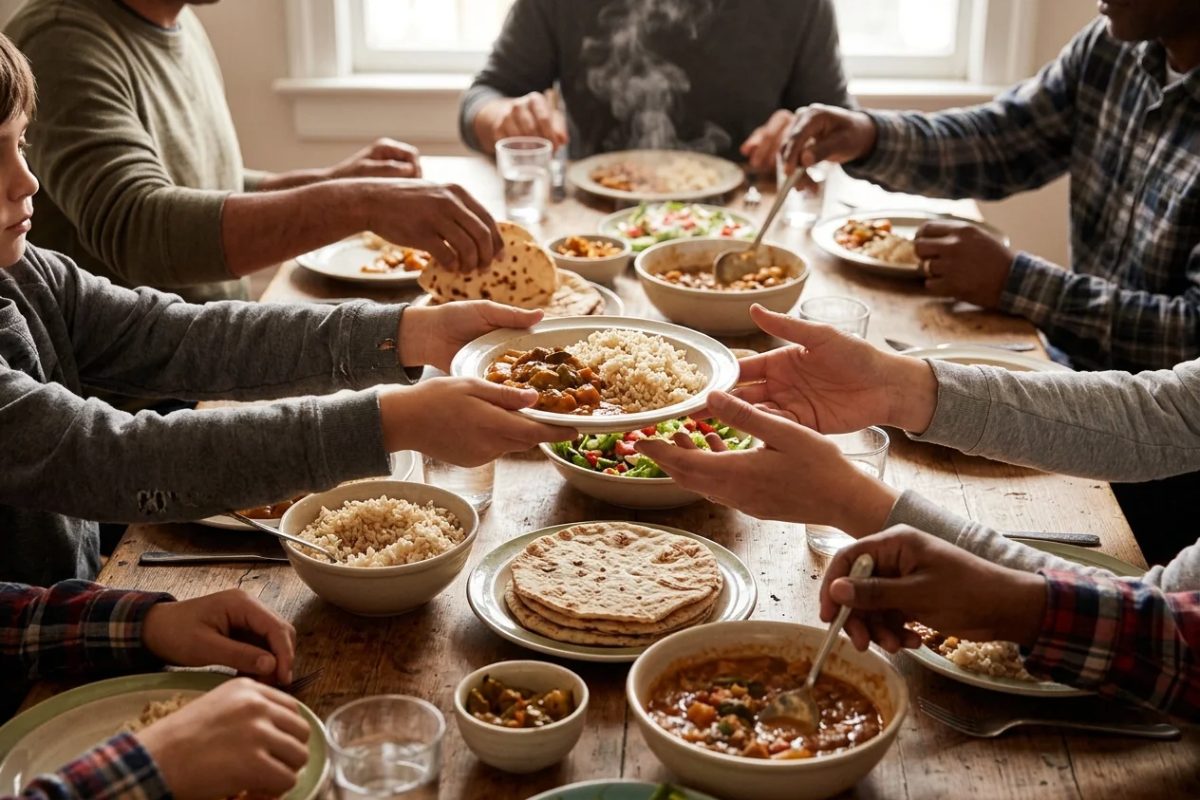
You're at a friend's house for tea. Their mum puts a plate in front of you.
You say, "Thank you, this looks nice." After, you carry your plate to the sink.
Her eyebrows go up. She's impressed. Next week, your friend says, "My mum says you can come again whenever you like."
Two small things did that. Here's how to be a great guest and a great host.
How do I be a good guest?
Pick a few of these. They work at any house.
- Say hello to the grown-ups. Not just your friend. A quick "Hi, thanks for having me" is perfect.
- Follow their rules. Shoes off? Snacks only in the kitchen? Every home is different. It's their home, so they get to decide how it works. Copy what your friend does.
- Help out. Offer to carry plates or tidy up after a game.
- Say thank you when you leave. To the grown-up as well as your friend.
What about sleepovers?
Sleepovers are fun and a bit weird. New bed. New sounds. Different breakfast.
It's fine to feel a bit homesick. Lots of people do. Bring something from home if it helps.
Their house, their rules. If they have lights out at 9, it's lights out at 9.
If anything ever feels wrong, you can ask to call home. You won't be in trouble. A good grown-up will help you.
How do I be a good host?
Being the host means the guest comes first. Why? They're in a new place and might feel shy. You know where everything is. Ask what they'd like to play. Offer them a drink. Show them where the toilet is.
Watch for anyone left out. At a party, make sure every guest gets a turn and someone to talk to.
Why send a thank you note?
Because it means more than you'd think. A note shows you took time to think about them.
A note can be tiny. "Thanks for the party. The cake was amazing." That's enough. A drawing works too. So does a message if you have one.
Easy to get wrong
- Opening cupboards or the fridge without asking. It's someone else's food and space.
- Being the host who plays on their own with the best toy.
- Forgetting the thank you at the door because you're rushing to the car or the bus.
Everyone starts from a different place
Not everyone can have friends round. Some homes are small, busy or shared. Some families are going through a tough time. That's fine. You can be a great host at the park, in the playground or at a club.
And not everyone gets invited to things. If that's you, you're not alone. Being a kind guest at school counts too.
Questions you might have
Do people really like thank you notes?
Yes. In one test, people wrote short thank you notes. The people who got them were much happier than the writers expected. They felt less awkward than expected too.
What if I feel homesick at a sleepover?
That's very normal. Tell your friend's grown-up. You can call home or go home. Nobody minds. Lots of people feel homesick the first few times they stay away.
Do I have to stay up all night?
No. Your body still needs sleep. Doctors in the US say ages 6 to 12 need 9 to 12 hours a night. Ages 13 to 17 need 8 to 10.
Why do some homes ask you to take shoes off?
It's a common custom in many countries. It keeps dirt off the floor. In some homes it's about respect. Rules differ by country and family, so just ask.
What if I don't like the food they give me?
Try a little and say "thank you". If you can't eat something because of your health or beliefs, tell the grown-up kindly. Most people want to know.
Does a thank you make people more helpful?
Yes. In one test, people who got a thank you were twice as likely to help another person later. A small thanks spreads.
Related topics
Please, thank you and sorry · Table manners and eating out · Making friends · Being left out · Your trusted adults
Collect the Everyone counts cards8 cards for this rule. Tap, try it, collect it.See the cardsSources
- Kumar and Epley, "Undervaluing gratitude: expressers misunderstand the consequences of showing appreciation", Psychological Science, 2018
- Grant and Gino, "A little thanks goes a long way: explaining why gratitude expressions motivate prosocial behavior", Journal of Personality and Social Psychology, volume 98, number 6, 2010
- CDC, "About sleep", checked November 2026
This is part of Everyone counts, one of the 7 BELIEVE rules. Article 42 of 191.