Module 12. Body and health All ages
Moving your body
Move in a way you enjoy, a bit every day. Play counts.
Draft. The BELIEVE team is still checking this page.
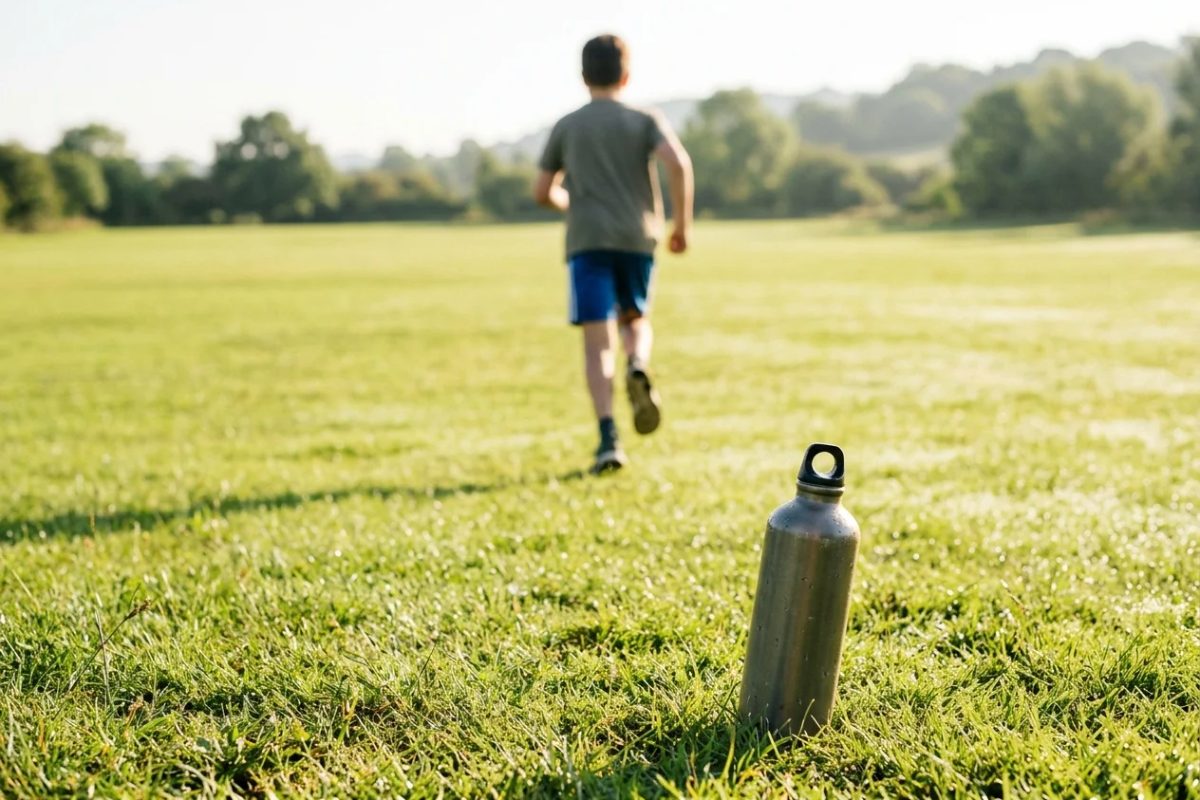
The bell goes for break. Some people sprint to the field. Some walk and chat. Some dance to a song only they can hear.
They're all moving. They're all doing it right.
Moving isn't only about sport or being the fastest. It's about using the body you've got and having fun with it.
Here's why it's worth it and how to fit it in.
How much should I move?
Health experts in the USA say 60 minutes or more a day for anyone aged 6 to 17. It should get you a bit puffed. That means your heart and lungs are working hard. That's how they get stronger.
That sounds like a lot. But it adds up. Walking to school, running at break and a game after tea can get you there.
On 3 days a week, try something that makes you push, pull or jump. Climbing, skipping and hopping all build strong bones and muscles. Bones get stronger when they're pushed, just like muscles do.
Why is moving good for you?
Loads of reasons. When you move, your heart beats faster. It pumps more blood to your muscles and your brain. Moving is linked to better learning and memory. It can lift your mood too, because your brain makes feel-good chemicals when you move.
And it's fun. Remember the last time you laughed so hard you fell over in a game? That's moving.
The World Health Organization checked on teens around the world. More than 8 in 10 weren't moving as much as experts suggest. So if you move every day, you're ahead of most.
What if I'm not sporty?
Good news. You don't have to be. Pick one of these.
- Dance. In your kitchen, in the playground, anywhere. Nobody's scoring it.
- Walk and talk. Go the long way round with a friend.
- Play like you're 5. Tag, hide and seek, the floor is lava.
- Help out. Carrying shopping and sweeping the floor count too.
Easy to get wrong
- Thinking it only counts if you're sweating buckets. Gentle moving counts too.
- Doing loads one day and nothing for a week. A bit every day works better.
- Giving up because you're not the best. Nobody's watching as closely as you think.
Everyone starts from a different place
Some people love sport. Some hate PE. Some use a wheelchair or have a body that hurts. Some don't have a park nearby or a safe place to play. That's all OK.
Start where you are. Stretch in your chair. Move your arms to music. Walk to the end of the road and back. Any moving is better than none. If something hurts, stop and tell a grown-up.
Questions you might have
How much moving do I need?
Health experts in the USA say people aged 6 to 17 need 60 minutes or more a day. It can be in small bits. Ten minutes here and there adds up.
Does moving help my brain?
Yes. Health experts say being active is linked to better learning and memory. It's also linked to feeling less low. So a run around at break can help you in class.
Do I have to do sport?
No. Any moving counts. Dancing, walking, skipping and climbing all do the job. Experts suggest pushing, pulling or jumping on 3 days a week to build strong bones.
Am I moving more than most people?
Maybe. The World Health Organization checked on teens around the world. More than 8 in 10 don't move as much as experts suggest. About 1 in 4 had no active days in a week.
Does being outside help?
It can. In one test, people sat or walked somewhere green for 20 to 30 minutes. Their stress levels dropped the most in that time. A park, a tree-lined street or a garden all count.
What if I have a disability?
Moving is for every body. Lots of sports and games can change to fit you. Talk to a grown-up, a teacher or a doctor about what feels good for your body.
Related topics
Why play matters · Being outdoors · Dancing, singing and being silly · Finding your thing · Being a good sport
Collect the Value yourself cards8 cards for this rule. Tap, try it, collect it.See the cardsSources
- CDC, "Physical Activity Guidelines for Students", checked November 2026, for 60 minutes a day, 3 days of strength and bone activity, and memory and mood
- World Health Organization, "Physical activity" fact sheet, 2026, for 86 in every 100 adolescents not active enough and 1 in 4 with no active days
- Hunter, Gillespie and Chen, "Urban nature experiences reduce stress in the context of daily life based on salivary biomarkers", Frontiers in Psychology, 2019, summarised in ScienceDaily, "Stressed? Take a 20-minute 'nature pill'", 2019
This is part of Value yourself, one of the 7 BELIEVE rules. Article 127 of 191.