Module 15. Play, sport and hobbies All ages
Why play matters
Play is how your brain grows, so keep some in every week.
Draft. The BELIEVE team is still checking this page.
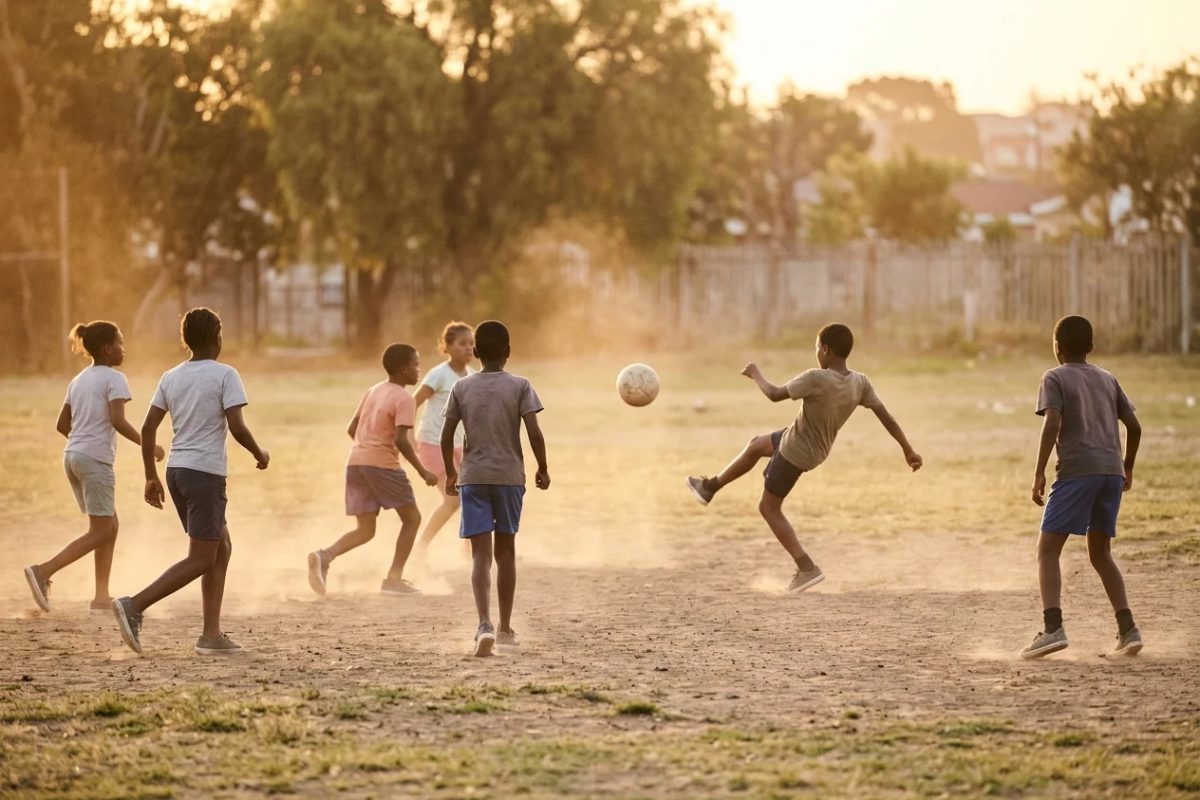
It's a wet Saturday. There's nothing on. Your little cousin grabs a sheet and two chairs.
Five minutes later, it's a castle. Then a spaceship. Then a shop that only sells socks.
Nobody planned it. Nobody's keeping score. And everyone's laughing.
That's play. It looks like messing about. It's doing a lot more than that.
What counts as play?
Loads of things. Tag in the park. Making up a dance. A board game. Building a den. Pretending the floor is lava.
A UN group looks after the rights of everyone under 18. It wrote down what play is. Play is done just for the fun of it. You choose it. You run it. Nobody else tells you how.
Why does it matter?
Play is a right. In 1989, the world made a big promise about the rights of everyone under 18. Nearly every country has signed it. One part says you have the right to rest and play.
Play also helps you grow. When you play, you make up rules. You share. You sort out arguments. You try things and see what happens. That's how you learn to plan, think and get on with people.
Moving counts too. Health experts say your body needs at least an hour of moving a day. Tag, dancing and running about all count. Why? Your heart is a muscle. Like your leg muscles, it gets stronger the more it works.
Am I too old for play?
No way. Grown-ups play too. Card games. Five-a-side. Silly voices for a baby.
As you get older, someone might say play is a waste of time. Lots of grown-ups would disagree. Play keeps you curious. It keeps you trying new things. That's the magic, and it's worth keeping.
How can I play more?
Pick one of these.
- Leave a gap. Keep one bit of your week with no plan. Free time gives your brain room to come up with its own ideas.
- Say yes. When someone asks "Want to play?", say yes. Even if you feel too old.
- Use what's there. A ball, a stick, a pen and some paper. Play doesn't need anything that costs money.
Easy to get wrong
- Thinking play has to be planned. The best games often start with "What if?"
- Turning every game into a contest. Some games are better with no winner. With no score to worry about, everyone can just have fun.
- Saying "That's babyish" when someone else is playing. It can make them stop for good.
Everyone starts from a different place
Some people have a big park nearby. Some live in a tiny flat. Some have lots of jobs at home or someone little to look after. Some use a wheelchair. Some find joining in hard. All of that's fine.
Start smaller. A game of I spy on the bus counts. So does a doodle, a made-up story or a dance in the kitchen. Play fits into small spaces.
Questions you might have
Is play really a right?
Yes. The UN Convention on the Rights of the Child came out in 1989. Article 31 says everyone under 18 has the right to rest, play and free time. 196 countries have agreed to it. No rights promise has more.
Do video games count as play?
They can. Gaming with friends can be fun and friendly. Health experts also say your body needs at least an hour of moving a day. So mix screen games with games that get you up.
How much free time do I need?
There's no set number. The UN group says you have a right to time that isn't run by grown-ups. A bit each day helps.
What if I've got nobody to play with?
You can play on your own. Make up a story. Draw a map of a made-up land. Kick a ball at a wall. The UN group says play is anything you choose just for fun.
Will I grow out of play?
No. Play changes as you grow. It might be a kick-about, a card game or being silly with friends. The UN promise on play covers everyone up to 18. After that, nobody's going to stop you.
Does play help at school?
It can. When you play, you practise sharing, planning and solving problems. The UN group says playing outside helps with balance, new ideas, working together and paying attention.
Related topics
Being bored · Being outdoors · Dancing, singing and being silly · Laughing and having fun · Moving your body
Collect the Enjoy the ride cards10 cards for this rule. Tap, try it, collect it.See the cardsSources
- United Nations, "Convention on the Rights of the Child", Article 31, UN General Assembly, 20 November 1989
- UN Committee on the Rights of the Child, "General comment No. 17 (2013) on the right of the child to rest, leisure, play, recreational activities, cultural life and the arts (art. 31)", CRC/C/GC/17, 17 April 2013
- World Health Organization, "New WHO-led study says majority of adolescents worldwide are not sufficiently physically active, putting their current and future health at risk", news release, 22 November 2019
- Guthold and others, "Global trends in insufficient physical activity among adolescents: a pooled analysis of 298 population-based surveys with 1.6 million participants", The Lancet Child and Adolescent Health, 2020
- UNICEF Europe and Central Asia, "The Convention on the Rights of the Child", on its 196 countries, checked November 2026
This is part of Enjoy the ride, one of the 7 BELIEVE rules. Article 158 of 191.