Module 15. Play, sport and hobbies All ages
Finding your thing
Try lots of things. Your thing might find you.
Draft. The BELIEVE team is still checking this page.
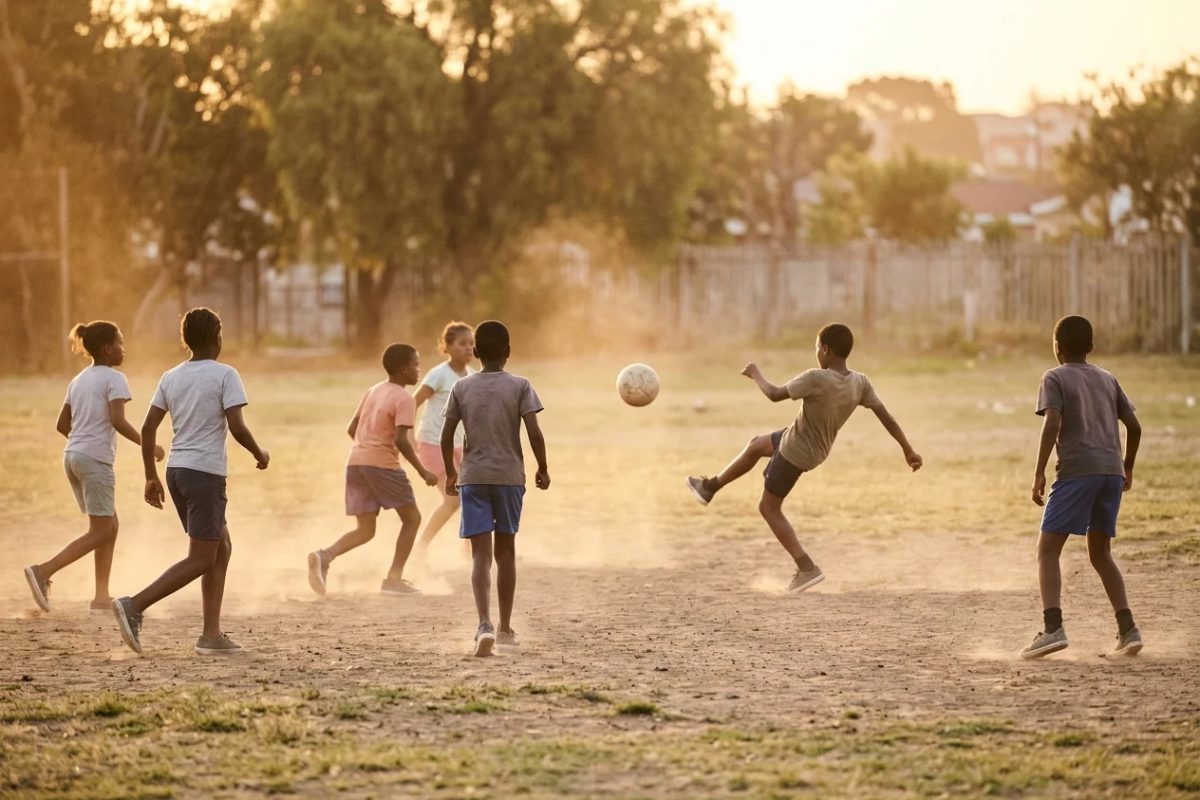
Your friend has football. Your cousin has drums. The girl next door draws comics every single day.
And you? You're not sure yet.
That's a really normal place to be. Most people try loads of things before one sticks.
Some people never pick just one. They like a bit of everything. That works too.
What's out there?
More than you might think. Sport, music, art, drama and dance. Coding, cooking, chess and gardening. Building things, writing stories and looking after animals.
Some cost money. Lots don't. Schools, libraries and community centres often run free clubs. What's on differs from place to place, so ask around.
How do I know it's my thing?
Look out for these signs.
- Time flies. You look up and an hour has gone.
- You want to go back. Even after a bad day at it.
- You get curious. You want to know how the best ones do it.
- You'd do it with nobody watching. Nobody has to make you.
Why is it OK to be rubbish at first?
Everyone is. Every great drummer once hit the drum and missed. Your brain learns by trying, missing and trying again. Each go makes the next one a bit easier.
In one test, grown-ups spent 45 minutes making art. About 3 in 4 had less stress hormone in their spit afterwards. Being good at art made no difference.
So you get the good stuff before you get good.
Do I have to pick just one?
No. Trying lots of things is a great plan. In one big survey, US parents said most young players quit a sport by about 11. The top reason was that it stopped being fun.
So keep the fun in whatever you pick. And keep trying new things too.
Easy to get wrong
- Giving up after one go. Give it 3 tries before you decide. The first go is often the hardest, because it's all new.
- Picking something only because your friends did. Going together is great. Check you like it too.
- Thinking you're too late. People start new things at every age.
Everyone starts from a different place
Some families can pay for lessons and kit. Lots can't. Some people can't get to clubs. Some have a body that works in a different way. Some are new and still learning the language. That's all fine.
Start with what's free and close. A library book on drawing. A ball against a wall. Singing along to the radio. Making up a play with a friend. Small tries still count.
Questions you might have
How many things should I try?
As many as you like. Give each one a fair go, like 3 tries. In one big survey, the top reason for quitting a sport was that it had stopped being fun. Keep the ones that make you smile.
What if my thing costs money?
Ask about free ways in. Schools, libraries and community centres often have clubs. A UN promise from 1989 covers everyone under 18. It says you have the right to play and join in with the arts.
What if I'm not good at it?
Then you're just starting. In one test, 45 minutes of art lowered stress for about 3 in 4 grown-ups. How good they were made no difference. Fun comes first. Skill comes later.
Is coding a hobby?
Yes. Making games, stories or cartoons with code is making things, like painting or building. There are free coding tools made for beginners. Ask a teacher or a librarian where to start.
Can a hobby be just for fun?
Yes. Nobody has to win anything. A UN group looks after the rights of everyone under 18. It says play is done just for the fun of it. Your hobby can be like that too.
What if my friends think my thing is weird?
Good friends get used to it. You could show them what you love about it. Clubs are a great place to meet people who like the same thing. If someone keeps being unkind, tell a grown-up you trust.
Related topics
What do you love doing? · Trying something new · Sticking with it · Music, art and making things · Making things with tech
Collect the Enjoy the ride cards10 cards for this rule. Tap, try it, collect it.See the cardsSources
- Aspen Institute Project Play, "Survey: Kids quit most sports by age 11", with the Utah State University Families in Sports Lab, 1 August 2019
- Kaimal, Ray and Muniz, "Reduction of cortisol levels and participants' responses following art making", Art Therapy, 2016
- United Nations, "Convention on the Rights of the Child", Article 31, UN General Assembly, 20 November 1989
- UN Committee on the Rights of the Child, "General comment No. 17 (2013) on the right of the child to rest, leisure, play, recreational activities, cultural life and the arts (art. 31)", CRC/C/GC/17, 17 April 2013
This is part of Enjoy the ride, one of the 7 BELIEVE rules. Article 159 of 191.