Module 14. Life online All ages
Screens and you
Screens are great fun. You get to be the boss of them.
Draft. The BELIEVE team is still checking this page.
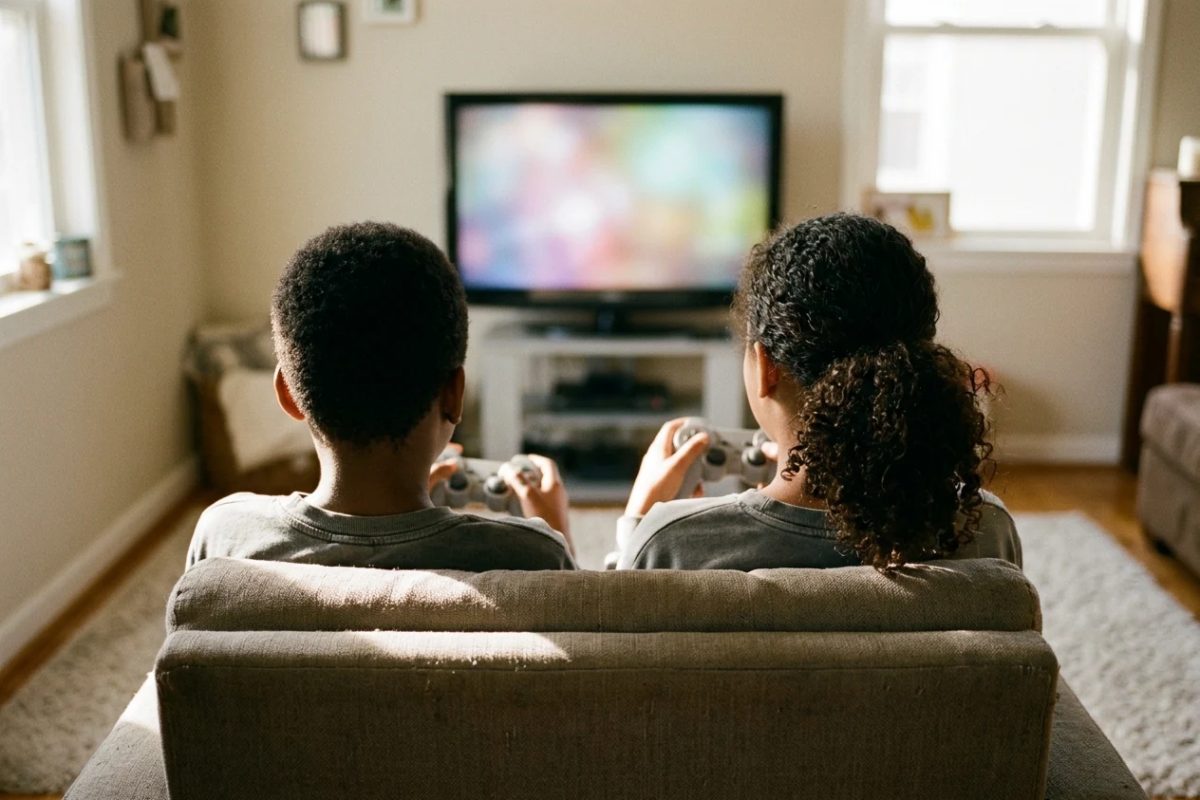
It's nearly bedtime. You're on the last level. Just one more go.
Then one more. Then it's an hour later and your eyes feel fizzy.
In the morning, the alarm sounds like a fire drill. Getting up feels like climbing out of a swamp.
Sound familiar? It happens to grown-ups too. Here's how to stay in charge.
How much is too much?
There's no magic number. A good test is how you feel.
Do you still have time for sleep, friends, moving about and being bored? Then you're probably doing fine.
Are screens squashing those out? Then it might be time to cut back a bit.
Why do screens keep me awake?
There are two reasons.
First, a game or a video wakes your brain up. An exciting game can even make your heart beat faster.
Second, the light from screens can upset a sleep chemical in your body. It's called melatonin. It tells your body it's time to sleep.
So doctors suggest stopping screens about an hour before bed.
Why is it so hard to stop?
Lots of games and apps are built to keep you going. Each new level, video or prize gives your brain a little buzz. So it wants one more. That's not you being weak. It's the design doing its job.
Pick one of these to help you stop.
- Stop at the end of something. Finish the level or the episode. Then stop before the next one starts. Stopping halfway leaves your brain itching to finish.
- Set a timer. Let a clock be the bossy one.
- Park it. Leave the screen out of the room where you sleep, if you can. If it's in reach, it's easy to pick up again.
- Have a next thing ready. A book, a drawing, a chat or a stretch.
Is all screen time the same?
No. Making a cartoon, calling a cousin or doing homework is different from scrolling for an hour.
Try asking yourself, "Am I making, learning or chatting? Or am I just scrolling?"
Easy to get wrong
- Saying "just 5 more minutes" five times in a row.
- Using a screen to help you fall asleep. It usually does the opposite.
- Forgetting to look up. Staring at something close for ages tires your eyes. Your body likes a break too.
Everyone starts from a different place
Some homes have lots of screens. Some have one shared phone or none at all. Some people use screens to talk, read or learn because of a disability. That's all fine.
Can't stop an hour before bed? Start with 10 minutes. Or swap the last video for a story. Small steps count.
Questions you might have
How long before bed should I stop?
Doctors at the American Academy of Pediatrics suggest about an hour. That gives your brain time to calm down. If an hour feels too long, start with 30 minutes and build up.
Why does the light matter?
The light from screens can upset melatonin. That's the chemical that helps you feel sleepy. It's one reason doctors suggest keeping phones and screens out of bedrooms at night.
Can games make it harder to sleep?
They can. Doctors say action-packed games can make you more alert and raise your heart rate. A calm game close to bedtime is easier on your sleep than a big battle.
Do other people really spend that long online?
Lots do. In the UK, 8 to 14 year olds spend about one day a week online. Ofcom found that in 2026. That's like 24 hours squeezed into 7 days.
What if my phone buzzes at night?
It can wake you up without you noticing. In one survey, about 1 in 3 teens said phone alerts woke them at night. Silent mode or another room can help.
Is sitting down a lot bad for me?
Too much sitting is linked to shorter sleep and less fitness, the World Health Organization says. The good news is that any moving counts. A dance or a walk counts.
Related topics
Sleep · Quiet time · Being bored · Moving your body · Your first phone
Collect the Value yourself cards8 cards for this rule. Tap, try it, collect it.See the cardsSources
- American Academy of Pediatrics, "Screen Time Affecting Sleep", 18 October 2023, for stopping an hour before bed, alert games, melatonin and bedrooms, checked November 2026
- Common Sense Media, "How are screens affecting my kid's sleep?", updated July 2025, for 36% of teens woken by alerts, checked November 2026
- Ofcom, "Younger phone owners, the rise of AI, and consumption over creation: our latest look at UK children's media lives", 21 May 2026, for one day a week online
- World Health Organization, "Physical activity" fact sheet, for sitting, fitness and sleep, checked November 2026
This is part of Value yourself, one of the 7 BELIEVE rules. Article 143 of 191.