Module 10. Money All ages
Pocket money
Split your money into spend, save and give. Each one does a different job.
Draft. The BELIEVE team is still checking this page.
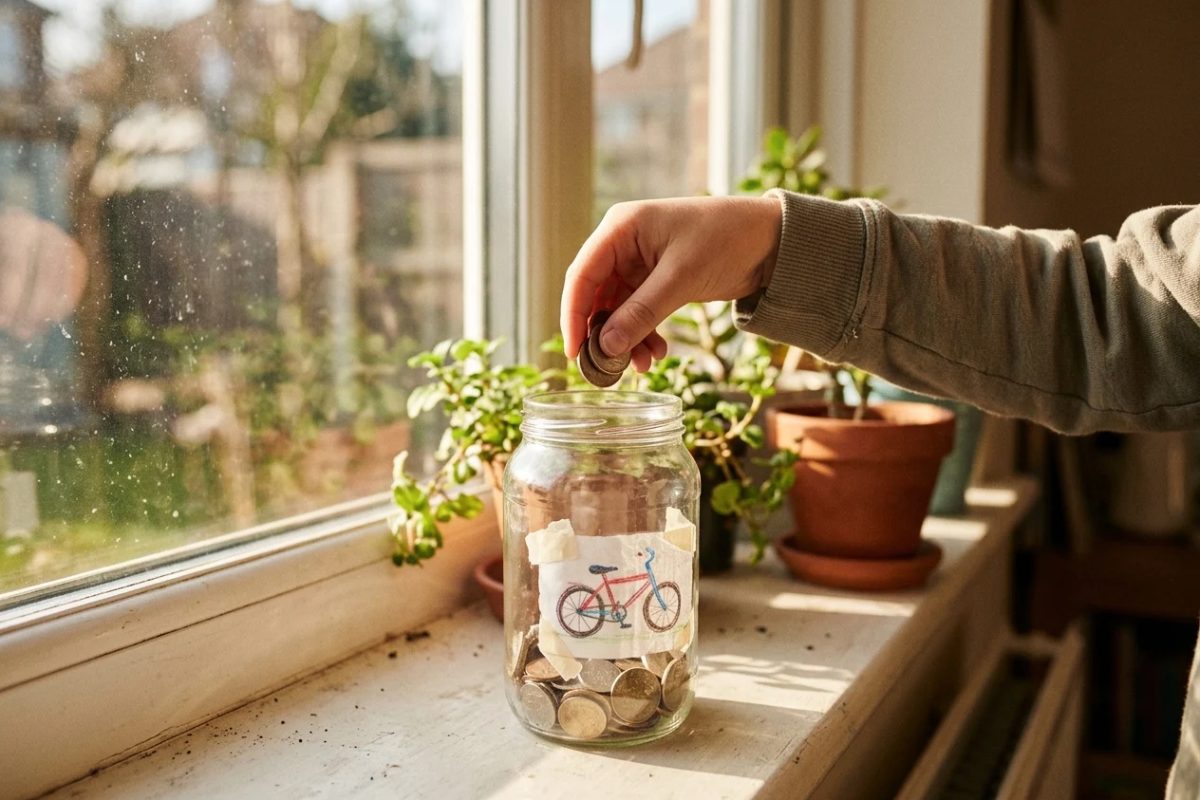
Someone hands you some money. Maybe it's pocket money. Maybe it's a birthday card with a surprise inside.
It feels great. Then it feels like it's burning a hole in your pocket. By Saturday, it's gone. What did you even buy?
Lots of people know that feeling. Here's a way to make money last and feel even better.
What is pocket money?
It's a bit of money that's yours to look after. Some people get some every week. Some get it for jobs at home. Some only get money on birthdays. Lots of people get none at all, and that's fine too.
Big or small, the same trick works.
What are spend, save and give?
Pick 3 places to keep money. Jars, envelopes or old boxes all work. Write a word on each.
- Spend. This is for now. Sweets, stickers, a comic. Enjoy it.
- Save. This is for later. Something bigger you can't buy yet.
- Give. This is for someone else. A present, a friend, a good cause.
Each time you get money, split it up. You choose how much goes where.
Why jars? Each one gives your money a job. Then you can see what's for now and what's for later.
Why give any away?
Because it feels good. Scientists gave people a little money. Some had to spend it on themselves. Some had to spend it on someone else. The ones who spent it on others were happier at the end of the day.
Giving doesn't have to be money. Your time, your help and your smile count too.
What if you spend it all?
That happens. Nobody gets it right every time. Next time, try putting the save money away first. Then spend what's left. Save what's left at the end, and there's often nothing left.
Easy to get wrong
- Spending it the second you get it. Try waiting one day first. That lets the "I want it now" feeling calm down.
- Keeping all your money in one pile. It's much harder to see what's for what.
- Thinking you need lots to start. Even 1 coin in each jar is a start.
Everyone starts from a different place
Some people get lots of pocket money. Some get a little. Some get none, or have to help their family with money. Nobody is better or worse for any of it.
No money right now? You can still practise. Split your time instead. Some for you, some for later and some to help someone.
Questions you might have
How much should I save?
There's no one right amount. You choose. Lots of people start with about half. If you put 3 out of every 10 into Save, you'd have 30 after 10 weeks.
Why do people say money habits start young?
Experts in Cambridge found that by about age 7, most people can count money. They also know you can swap it for things. Habits you start now often stick.
Does giving really make you happier?
In one test, people got either a little money or a bit more. Some spent it on others. Those people felt happier that evening. How much they had made no difference.
Does that work for someone really little too?
Yes. In one test, toddlers under 2 seemed happier giving treats away than getting treats. They were happiest of all when they gave away their own treats.
What if I don't get pocket money?
That's normal for lots of people. You can still practise with birthday money or found coins. Or ask a grown-up if there's a small job you could do.
Can I change how I split it?
Yes, any time. If you're saving for something big, put more in Save. If a friend's birthday is coming up, put more in Give. It's your plan.
Related topics
What money is · Needs and wants · Saving up for something · Earning your own money · Helping out
Collect the Effort every day cards8 cards for this rule. Tap, try it, collect it.See the cardsSources
- Dunn, Aknin and Norton, "Spending money on others promotes happiness", Science, 2008
- Aknin, Hamlin and Dunn, "Giving leads to happiness in young children", PLOS ONE, 2012
- Whitebread and Bingham, "Habit formation and learning in young children", University of Cambridge for the Money Advice Service, May 2013
This is part of Effort every day, one of the 7 BELIEVE rules. Article 106 of 191.