Module 10. Money All ages
Saving up for something
Pick a target, save a little often and watch it grow.
Draft. The BELIEVE team is still checking this page.
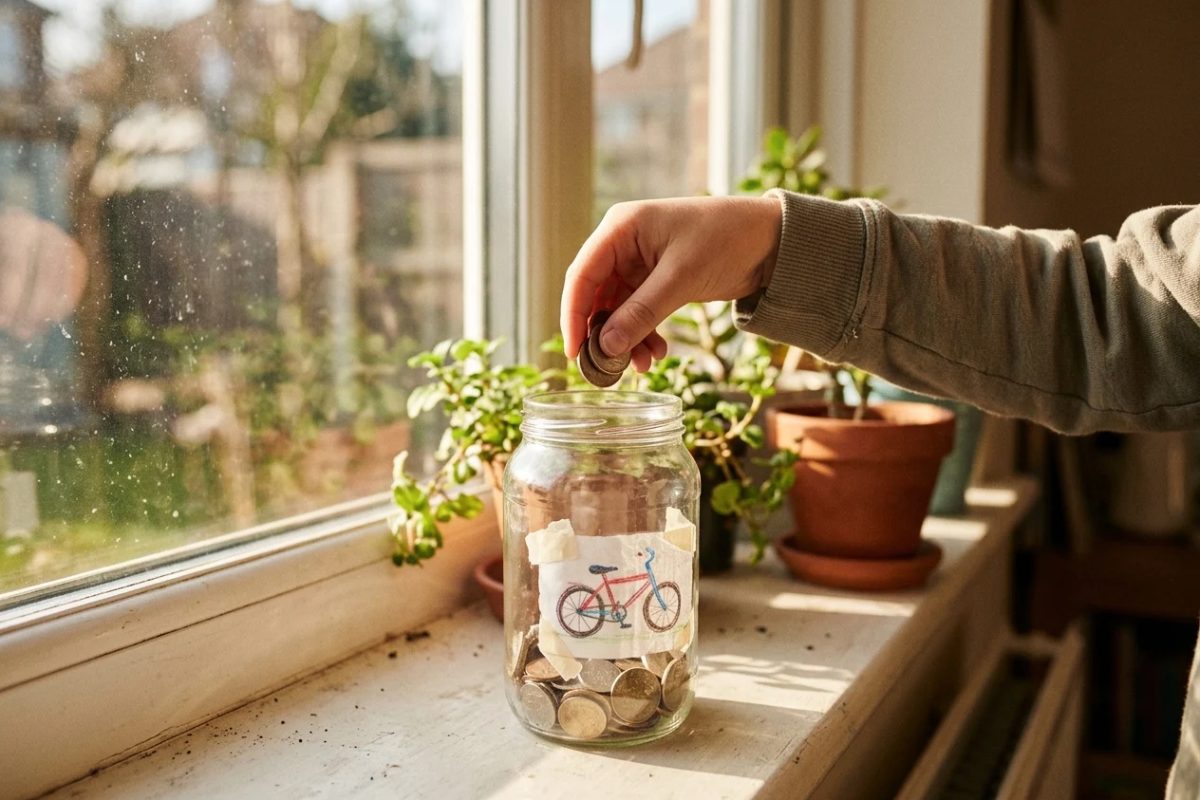
There's something you really want. Maybe a football. Maybe art pens. Maybe a book with a shiny cover.
You check your money. Not enough. Not even close.
You've got two choices. Give up on it. Or save up for it.
Saving up takes a while. But the day you finally get it feels amazing. And you'll look after it better too, because you worked for it.
How do I start?
Pick your target. Write down what it is and how much it costs.
Then work out how long it'll take. Say it costs 20 and you can save 2 a week. 20 divided by 2 is 10. So that's 10 weeks.
Now you've got a plan.
How do I keep going?
Pick one of these.
- Draw a chart. Draw a jar or a ladder with 10 steps. Colour one in each time you save. Seeing how far you've come makes it easier to keep going.
- Stick up a picture. Draw the thing you want. Put it where you'll see it. It reminds you why you're waiting.
- Keep it out of reach. Money in your pocket gets spent. Money in a jar on a high shelf doesn't.
- Save first. When you get money, put the saving bit away before you spend anything.
What if I want to give up?
Everyone feels like that around halfway. The start is exciting. The end is exciting. The middle is just slow.
Look at your chart. See how far you've come. Every step coloured in is one you'll never have to do again.
What if I change my mind?
That's fine. Wants change. Wait a week to be sure. If you still don't want it, you've got savings ready for something else. Nothing is wasted.
Easy to get wrong
- Picking a target so big it takes forever. Start with something you could reach in a few weeks.
- Dipping into the jar "just this once". Once often turns into lots of times.
- Forgetting to check the price again. Prices change. Look before you buy.
Everyone starts from a different place
Some people can save a lot each week. Some can save a tiny bit. Some have nothing to save right now. Saving 1 coin counts as saving.
If money is short, you can still practise. Save up for something free, like time. Do 10 minutes of a hobby each day and colour in a box.
Questions you might have
How long will it take?
Divide the price by what you save each time. Something that costs 30, saving 3 a week, takes 10 weeks. Saving 5 a week, it takes 6 weeks.
Is it better to save a little often or a lot once?
A little often is easier to keep up. Saving 1 a week gives you 52 in a year. Small amounts soon add up.
Where should I keep my savings?
Somewhere safe and hard to grab, like a jar on a high shelf. Later, a bank can help. In poorer and middle-income countries, 2 in 5 grown-ups saved in a bank or phone account in 2024.
What if someone gives me money for my target?
Lucky you! Add it to your chart and colour in extra boxes. Birthday money can cut weeks off. Say thank you and tell them what it's for.
Why does waiting feel so hard?
A treat now feels bigger than a treat later. Almost everyone feels that pull, even grown-ups. A picture of your target where you can see it helps.
Is saving for later more important than fun now?
Both matter. Lots of people split their money. A bit for fun now and a bit for later. Even saving 2 out of every 10 adds up.
Related topics
Pocket money · Needs and wants · How money grows · Setting a goal · Sticking with it
Collect the Effort every day cards8 cards for this rule. Tap, try it, collect it.See the cardsSources
- Whitebread and Bingham, "Habit formation and learning in young children", University of Cambridge for the Money Advice Service, May 2013
- World Bank, "Mobile-phone technology powers saving surge in developing economies", Global Findex 2025 press release, July 2025
This is part of Effort every day, one of the 7 BELIEVE rules. Article 107 of 191.