Module 8. The wider world All ages
Learning a language
You don't need a whole language. A few words can make someone's day.
Draft. The BELIEVE team is still checking this page.
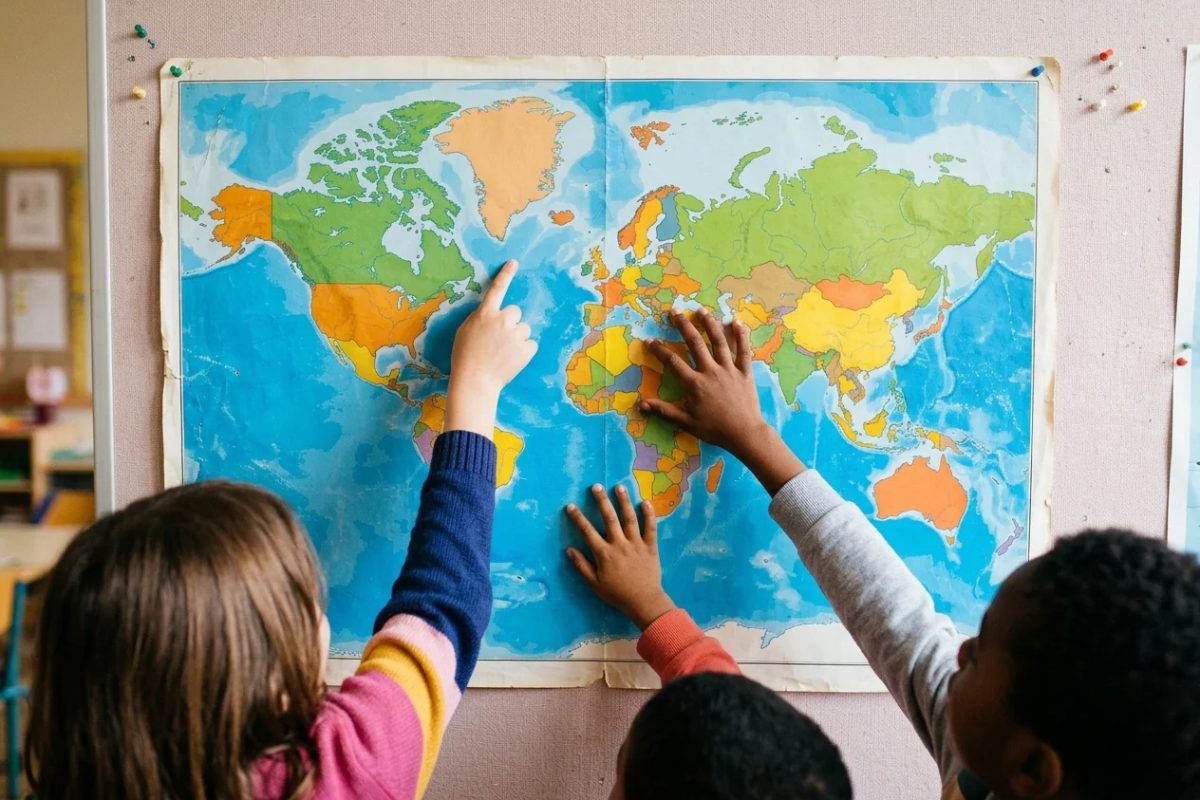
A new girl joins your class. She doesn't speak much of your language yet. At lunch, she sits at the end of the table on her own.
You remember one word from her language. It means "hello". You say it, a bit wobbly.
Her face lights up. She says it back. Then she laughs at how you said it. You laugh too.
One word. That's all it took.
Why bother with a few words?
A few words show you care. People notice when you try, even if you get it a bit wrong. It's like holding a door open. Small, but it means a lot.
A new word is also a key. It opens up songs, jokes and stories you couldn't get into before.
Am I too old to learn?
No. Babies start out able to hear the sounds of every language. Before their first birthday, they tune in to the ones they hear most.
But your brain keeps learning all your life. Lots of people learn a new language as grown-ups. It takes practice at any age.
Which language could I learn?
Any you like. More than 7,000 languages are spoken today. Pick one a friend speaks. Or one from a song you love. Or one from a place you'd love to see one day.
Sign languages count too. There are more than 300 of them.
How do I start?
Pick one of these.
- Learn five words. Hello, please, thank you, sorry and goodbye. They work almost everywhere.
- Ask a friend. If a friend speaks another language, ask them to teach you one word a day. Most people love being the teacher. And people help you learn better than screens do.
- Sing it. Songs help words stick in your head. Why? You sing the same words again and again. Each time, your brain gets better at finding them.
- Label things. Write the new word for "door" on a scrap of paper. Stick it on the door. Say it every time you walk past.
Easy to get wrong
- Waiting until you're perfect. Nobody is. Have a go.
- Laughing at someone's accent. An accent means they speak more than one language. That's clever.
- Getting cross when you forget. Forgetting and then remembering again helps words stick.
Everyone starts from a different place
Some people speak two or three languages at home. Some speak one. Some are learning a new language right now because they moved country. That's really hard work. Some people find reading or speaking tricky. All of that is fine.
If a whole language feels too big, start with one word. Learn "thank you" in the language of someone you know. Use it this week.
Questions you might have
How many languages are there?
Experts who count languages say 7,164 are in use today. About 4 in 10 of them are in danger of dying out. Many have fewer than 1,000 people who still use them.
Do deaf people all use the same sign language?
No. There are more than 70 million deaf people in the world. Together they use more than 300 different sign languages. Each one has its own signs and rules.
Is it easier to learn when you're a baby?
Babies are born able to hear the sounds of every language. In the second half of their first year, they tune in to the ones they hear. Older learners can still do brilliantly.
Do lots of people speak the same few languages?
Yes. Just 23 languages are spoken by more than half the people on Earth. Thousands of other languages have far fewer speakers.
Do I need an app or a video?
No. People help most. In one test, a real person played and read with babies in a new language. Those babies learned new sounds. Babies who only watched a video of it didn't learn the sounds.
What if I mix up my languages?
That's normal when you're learning. Your brain is busy sorting new words into place. People who speak two languages often mix them a bit. Keep going and it gets easier.
Related topics
Meeting someone new · People who are different from you · The world and its people · Travelling · How your brain learns
Collect the Imagine big cards5 cards for this rule. Tap, try it, collect it.See the cardsSources
- Ethnologue, "How many languages are there in the world?", SIL International, checked November 2026, for 7,164 languages, the 4 in 10 endangered and the 23 biggest languages
- United Nations, International Day of Sign Languages, checked November 2026, for the World Federation of the Deaf figures
- Kuhl, Tsao and Liu, "Foreign-language experience in infancy: effects of short-term exposure and social interaction on phonetic learning", Proceedings of the National Academy of Sciences, 2003
- UW News, "Social interaction plays key role in how infants learn language, studies show", University of Washington, 14 July 2003
This is part of Imagine big, one of the 7 BELIEVE rules. Article 85 of 191.