Module 16. Happy with what you have Age 10+
Be yourself
The right people will like you for who you really are.
Draft. The BELIEVE team is still checking this page.
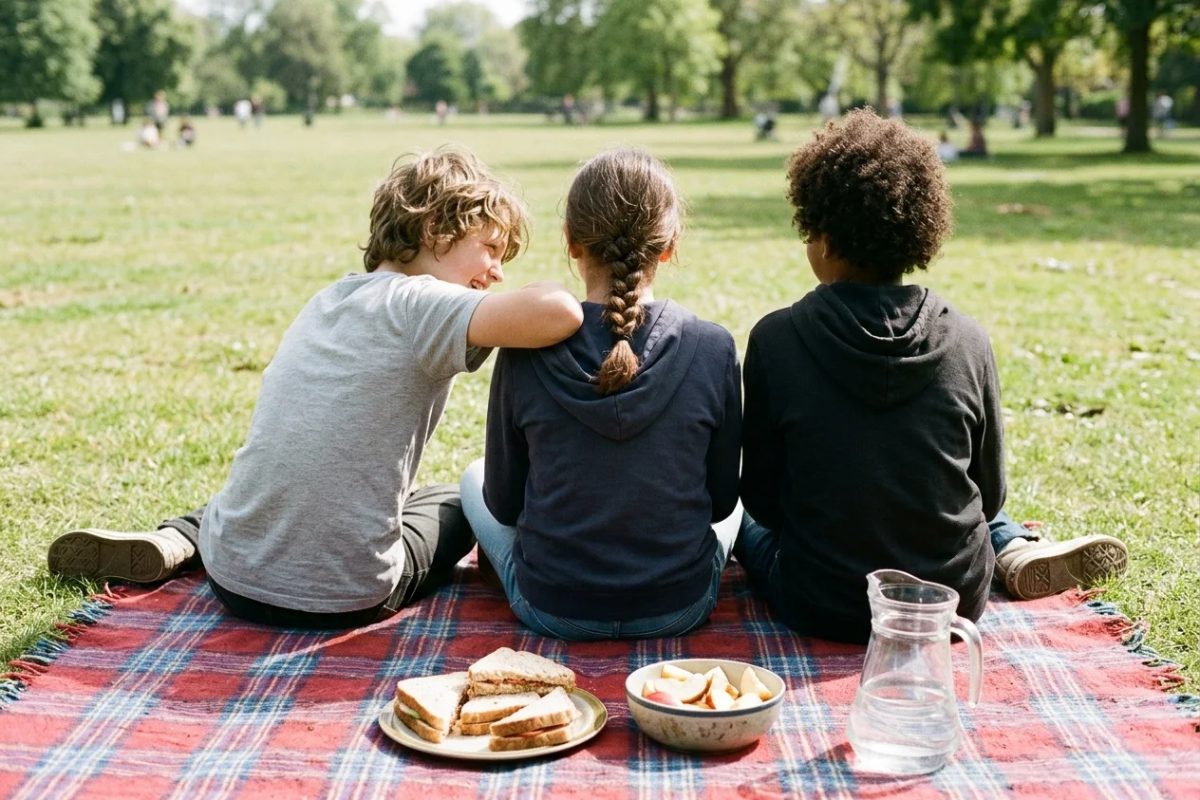
Your group all love the same band. You've never really liked it. But you nod along and say, "Yeah, it's great."
Then someone asks for your favourite song. Your mind goes blank. You don't want to say the wrong thing.
Wanting to fit in is normal. Everyone wants to belong somewhere.
But pretending all the time is tiring. Why? You keep checking what to say, like acting in a play that never ends. And people never get to know the real you.
Why do I care so much about fitting in?
Because being part of a group feels safe. People have always needed each other.
That feeling often gets stronger as you head into your teens. Scientists have seen it in the brain. Feeling self-conscious grows around this age. Knowing that can help. It's a stage, and it's not just you.
Is everyone looking at me?
Much less than you think.
In one test, people wore an embarrassing T-shirt into a room. They thought about half the room noticed. Only about 1 in 4 did.
Most people are busy worrying about themselves.
Do I have to change to fit in?
No. You can change your mind about things. That's part of growing up. But it's yours to change.
Fitting in means changing to match a group. Belonging means being liked as you are. Belonging feels much better.
How do I find my people?
Pick one of these.
- Follow what you love. Join a club, a team or a group for the thing you enjoy. Your people are often there.
- Say one true thing. "I actually prefer a different song." Small and honest.
- Look around. Who else seems a bit left out? Say hello.
- Keep old friends too. You can belong to more than one group.
Easy to get wrong
- Thinking everyone else feels sure of themselves. Lots of people hide how they feel.
- Copying a group so hard you forget what you like.
- Leaving someone out to fit in yourself. It feels bad for both of you.
Everyone starts from a different place
Some people stand out because of how they look, speak, pray or move. Some are new to a country or a language. Some have a disability. Some don't feel like they fit anywhere yet. That's all fine. A big agreement signed by 196 countries says everyone gets the same rights, whoever they are.
Start small. Share one thing you like with one person. If you're being picked on for who you are, tell a grown-up you trust. You can also find someone to talk to at findahelpline.com.
Questions you might have
Why does fitting in feel so important?
It's how people stay close to each other. Scientists found feeling self-conscious gets stronger as people head into their teens. Knowing it's normal can make it easier.
What if people think I'm weird?
Fewer people notice than you think. In one test, people in an embarrassing T-shirt thought half the room saw. Only about 1 in 4 did.
Does everyone else feel confident?
No. In one test, students guessed how often others felt bad. They guessed about 17 percent too low. Lots of people hide worries behind a smile.
Can I fit in and still be me?
Yes. You can share some things with a group and keep your own likes too. Belonging means being liked as you are. Most people belong to more than one group.
Is it OK to be different?
Yes. A big agreement signed in 1989 says everyone under 18 has the right to their own identity. It also says everyone gets the same rights, whoever they are.
What if nobody likes the same things as me?
Look wider. Try a club, a library group or a new class. In one test, students who thought others never struggled felt lonelier. Your people may be closer than you think.
Related topics
Being yourself as you grow up · Making friends · Friendship groups and group chats · Thinking for yourself in a crowd · Comparing yourself with others
Collect the Enjoy the ride cards10 cards for this rule. Tap, try it, collect it.See the cardsSources
- Gilovich, Medvec and Savitsky, "The spotlight effect in social judgment: an egocentric bias in estimates of the salience of one's own actions and appearance", Journal of Personality and Social Psychology, 2000
- Somerville and others, "The medial prefrontal cortex and the emergence of self-conscious emotion in adolescence", Psychological Science, 2013
- Jordan, Monin, Dweck, Lovett, John and Gross, "Misery has more company than people think: underestimating the prevalence of others' negative emotions", Personality and Social Psychology Bulletin, 2011, summarised by the British Psychological Society Research Digest, "Other people may experience more misery than you realise", 24 January 2011
- UNICEF Europe and Central Asia, "The Convention on the Rights of the Child", Articles 2 and 8, checked November 2026
This is part of Enjoy the ride, one of the 7 BELIEVE rules. Article 175 of 191.