Module 16. Happy with what you have Age 10+
Keeping your spark as you grow up
Stay curious, stay playful and keep having a go, even as you get older.
Draft. The BELIEVE team is still checking this page.
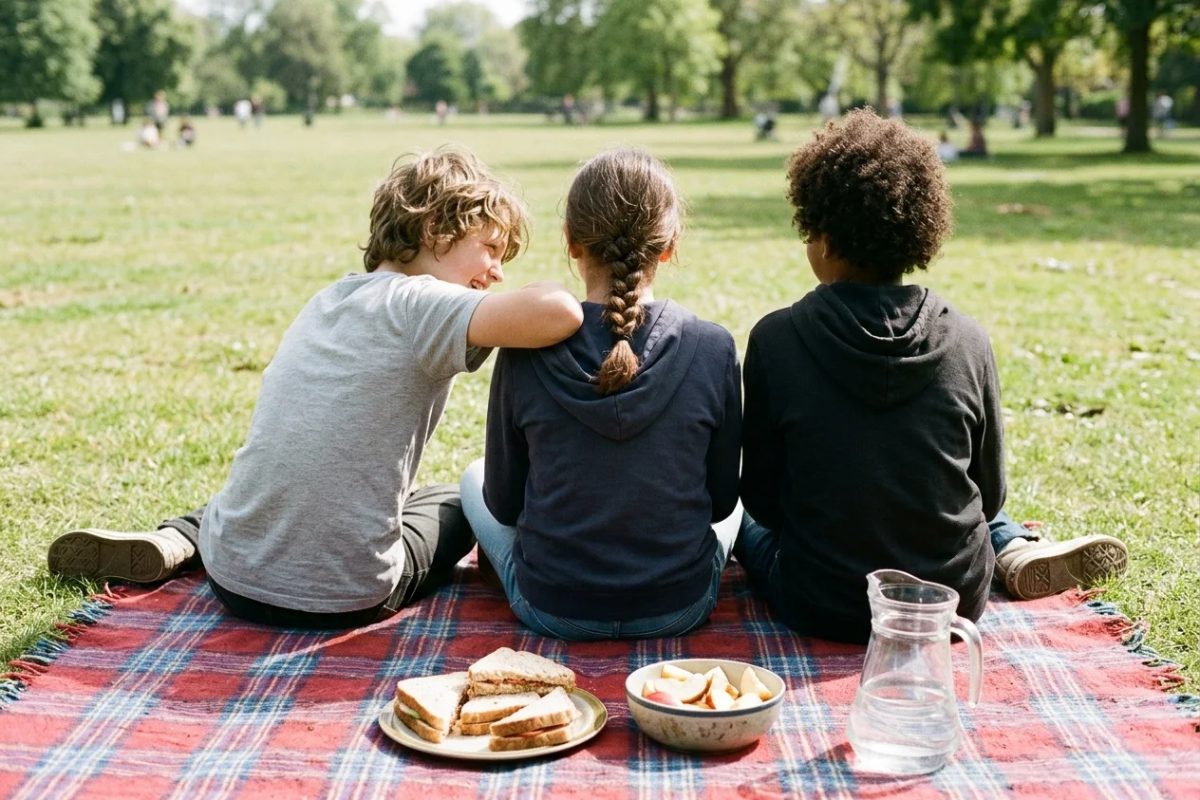
Watch someone little at the park. They climb, fall, laugh and climb again. They ask "Why?" about everything. Why is the sky blue?
Now watch a group of older teens. Lots of them stand at the side. Arms folded. Too cool to swing.
Somewhere along the way, lots of people lose a bit of their spark.
It doesn't have to go. Here's how to hang on to it.
Where does the spark go?
Lots of it goes into worrying what people think.
Scientists have seen this in the brain. Feeling self-conscious grows as people head into their teens. Suddenly, trying something new feels risky.
Questions drop off too. At home, someone little can ask 1 to 3 questions a minute. Scientists watched classes of 8 to 12 year olds learning about the world. Each whole class asked just 3 or 4 questions an hour.
Why does staying curious matter?
Curious brains learn more.
In one test, people rated how curious they were about quiz questions. A day later, they remembered more answers they'd been curious about. They even remembered faces they saw while curious. Why? Brain scans showed that curiosity wakes up the parts of your brain that handle rewards and memory. It's a bit like your brain opening its doors wider.
Am I too old to play?
No. Nobody is. Grown-ups play football, dance in kitchens and build models.
A United Nations group says play matters all the way through growing up. They say teens need some challenge to grow, too.
How do I keep my spark?
Pick one of these.
- Ask one "why" a day. About anything. Look it up or ask someone.
- Try a thing you're bad at. A new sport, a song or a recipe. Being a beginner is fun.
- Play with someone younger. It gives you a good excuse to be silly.
- Keep one hobby just for fun. No marks, no prizes, no posting it.
Easy to get wrong
- Thinking being bored looks cool. It mostly just feels boring.
- Dropping everything you loved at 9. Some of it might still be fun at 14.
- Waiting until you're sure you won't look silly. That day might never come.
Everyone starts from a different place
Some people have lots of time to play. Some help out at home a lot, or look after others. Some feel shy or worried. Some have a body that makes some games harder. That's all fine.
Start small. One question a day. Five minutes of play. If worries are stopping you from enjoying anything for a long time, tell a grown-up you trust. You can also find someone to talk to at findahelpline.com.
Questions you might have
Why do people stop asking questions?
Lots of reasons, like worrying what others think. At home, someone little can ask 1 to 3 questions a minute. In classes of 8 to 12 year olds, each whole class asked just 3 or 4 an hour.
Does being curious help at school?
It seems to. In one test, people remembered more answers to quiz questions they were curious about. They were tested again a day later and still remembered more.
Why do I feel more embarrassed than I used to?
It's part of growing up. Scientists found feeling self-conscious gets stronger as people head into their teens. Knowing it's normal can help you ignore it.
Is play really OK at my age?
Yes. A United Nations group wrote a guide on play in 2013. It says play matters right through growing up. It says teens need some challenge to grow.
What if my friends think it's babyish?
Some might. But fewer people are watching than you think. In one test, people in an embarrassing T-shirt thought half the room noticed. Only about 1 in 4 did.
How do I find new things to be curious about?
Notice what makes you say "huh?" In one test, being curious about a question helped people remember other things seen at the same time. Follow that feeling.
Related topics
Keeping your hobbies as a teenager · Why play matters · Dancing, singing and being silly · Asking good questions · Being yourself as you grow up
Collect the Enjoy the ride cards10 cards for this rule. Tap, try it, collect it.See the cardsSources
- Somerville and others, "The medial prefrontal cortex and the emergence of self-conscious emotion in adolescence", Psychological Science, 2013
- "What children learn from questioning", Educational Leadership, ASCD, volume 73, number 1, September 2015, on Chouinard, Monographs of the Society for Research in Child Development, 2007, and Susskind, 1979 (classes in grades 3 to 6)
- Gruber, Gelman and Ranganath, "States of curiosity modulate hippocampus-dependent learning via the dopaminergic circuit", Neuron, 2014
- UN Committee on the Rights of the Child, "General comment No. 17 (2013) on the right of the child to rest, leisure, play, recreational activities, cultural life and the arts (art. 31)", 17 April 2013, section IV.A on adolescence
- Gilovich, Medvec and Savitsky, "The spotlight effect in social judgment: an egocentric bias in estimates of the salience of one's own actions and appearance", Journal of Personality and Social Psychology, 2000
This is part of Enjoy the ride, one of the 7 BELIEVE rules. Article 178 of 191.