Module 16. Happy with what you have All ages
Three good things
Spot 3 good things each day, and say thanks for them.
Draft. The BELIEVE team is still checking this page.
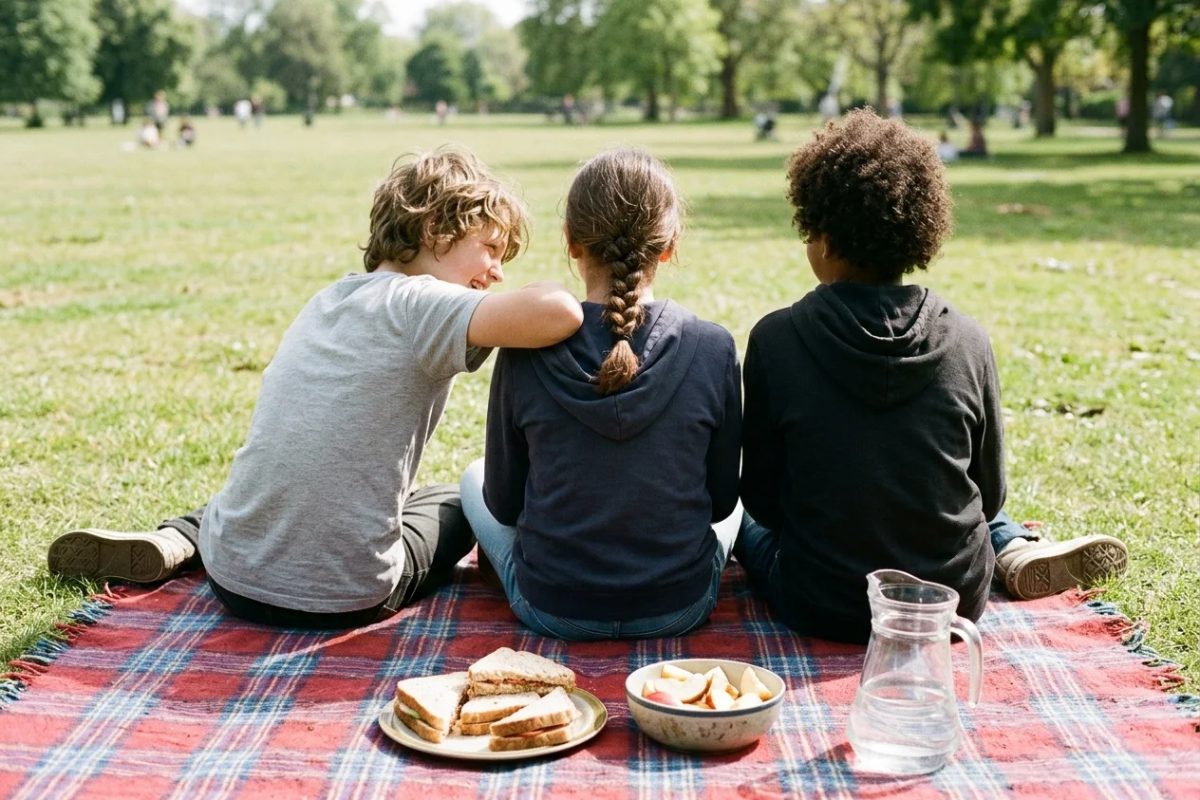
It's the end of the day. Someone asks, "How was school?"
You say, "Fine." Or maybe, "Rubbish. We had a test."
But wait. A friend saved you a seat at lunch. You found a coin on the path. The bus came on time for once.
Those good bits were there. They just slipped past. This trick helps you catch them.
What is it?
It's easy. Each night, think of 3 good things from your day. Then think why each one happened.
That's it. No pen needed. You can say them in your head, out loud or to someone at home.
Do small things count?
Yes. Small things are the best bit.
A warm drink. A song you like. A joke that made milk come out of your nose. A teacher who said "well done".
Big days don't come often. Small good things turn up all the time.
Why does it work?
Your brain spots bad things more easily than good ones. That once helped people stay safe from danger. But it means good bits slip past, like water through a net. Looking for them each night helps you catch them.
Scientists tested this. People did 3 good things every night for a week. They felt happier for months after.
Another test was in schools. Students wrote down things they were thankful for, every day for 2 weeks. They felt better about school after it.
How can I say thanks?
Pick one of these.
- Say it. "Thanks for saving me a seat." It takes 2 seconds. It helps the other person feel noticed, and you feel good too.
- Say why. "Thanks for helping. Now the homework makes sense."
- Tell someone else. "Our bus driver waited for me. That was kind."
- Thank yourself. "I kept going in that race. Nice one."
Easy to get wrong
- Picking the same 3 things every night. Try to spot new ones.
- Only counting big stuff. A good sandwich counts.
- Expecting every day to be a happy one. Bad days happen. One good thing on a bad day is plenty.
Everyone starts from a different place
Some days are hard. Some homes are noisy or sad. Some people have a lot going on. That's all fine. Nobody has to pretend things are good.
If 3 feels like too many today, start with 1. A sunny bit of sky. A friendly face. A warm bed. If things feel hard a lot of the time, tell a grown-up you trust. You can also find someone to talk to at findahelpline.com.
Questions you might have
What if nothing good happened?
Look smaller. In one test, students wrote up to 5 things a day. Things like a kind word or a nice meal counted. On a hard day, one small thing is enough.
Do I have to write it down?
No. You can just think it or say it. In the first big test, people also thought about why each good thing happened. It only takes a few minutes.
How long until I feel a difference?
Try it for a week. In one test, people who did it every night for a week were still happier 6 months later.
Is it just for when I'm sad?
No. It's for any day. In one test, students who counted good things got happier about school. They felt more thankful to people who helped them too.
Does it make people kinder?
It can. In one test, teens kept a thank-you diary. Then they could give some money away. They gave about 60 percent more than a group who didn't keep one.
Can I do it with my family?
Yes. Lots of families share good things at dinner or bedtime. Scientists found sharing good news with others makes it feel even better.
Related topics
Celebrating · Please, thank you and sorry · Being where you are · Enough · Naming your feelings
Collect the Enjoy the ride cards10 cards for this rule. Tap, try it, collect it.See the cardsSources
- Seligman, Steen, Park and Peterson, "Positive psychology progress: empirical validation of interventions", American Psychologist, 2005
- Greater Good in Action, "Three Good Things", Greater Good Science Center, UC Berkeley, checked November 2026
- Froh, Sefick and Emmons, "Counting blessings in early adolescents: an experimental study of gratitude and subjective well-being", Journal of School Psychology, 2008
- Froh, "A lesson in thanks", Greater Good Magazine, 1 June 2007
- Chaplin, John, Rindfleisch and Froh, "The impact of gratitude on adolescent materialism and generosity", The Journal of Positive Psychology, 2018, summarised by the University of Illinois, "Paper: Fostering gratitude reduces materialism, increases generosity in adolescents", 12 November 2018
- Gable, Reis, Impett and Asher, "What do you do when things go right? The intrapersonal and interpersonal benefits of sharing positive events", Journal of Personality and Social Psychology, 2004
This is part of Enjoy the ride, one of the 7 BELIEVE rules. Article 168 of 191.