Module 16. Happy with what you have All ages
Making memories
The best memories are often small, free and shared.
Draft. The BELIEVE team is still checking this page.
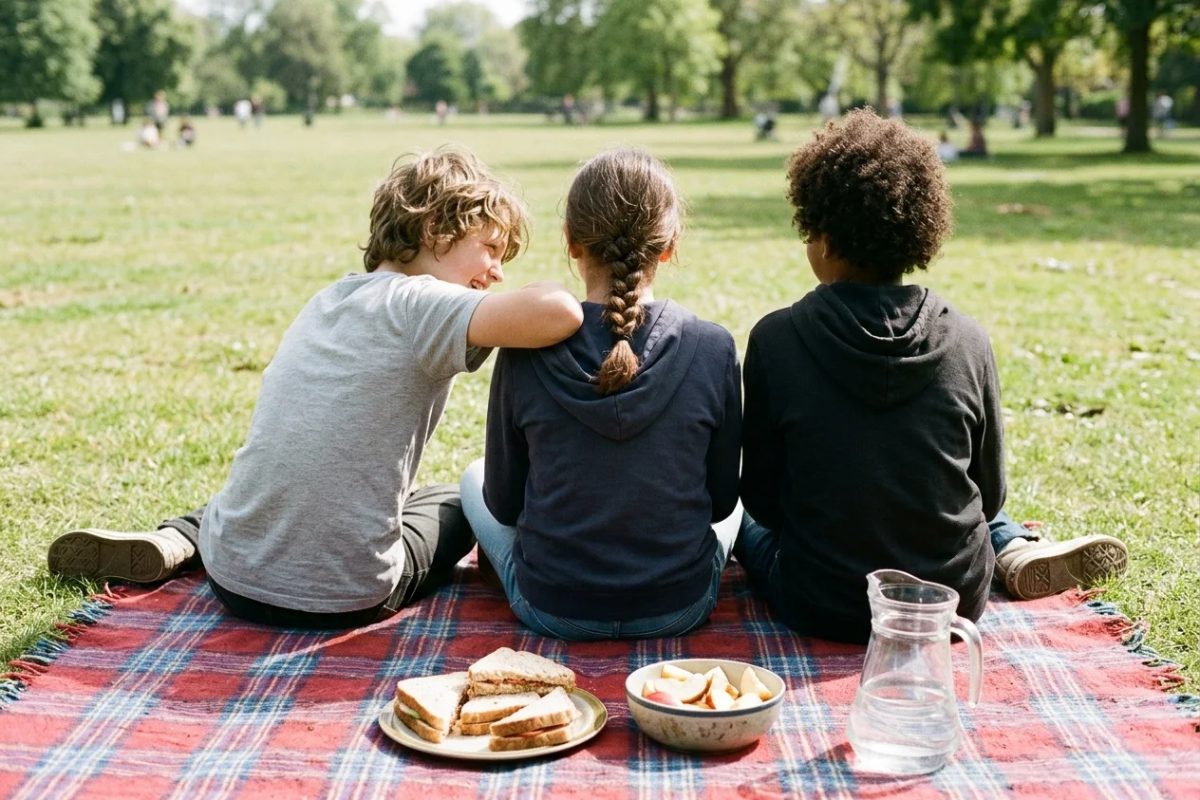
Think back to a really good day. What do you remember?
Maybe it wasn't the present. Maybe it was the cake that went wrong and everyone laughed. Or the walk where you got soaked and sang all the way home.
Funny thing. The moments that stick are often the small ones.
What makes a memory stick?
Doing something, rather than having something, often sticks longer.
In one big survey, over 1,200 grown-ups thought about things they'd bought. More than half said a day out or a trip made them happier than a thing. Why? A thing sits on a shelf. A day out turns into a story you can tell again and again.
Sharing helps too. In one test, good things people told others about were more likely to be remembered later. Each time you tell it, your brain goes over it again.
What's a tradition?
It's something you do again and again, often at the same time. It can be big or tiny.
- Pancakes on a Saturday.
- A song you always sing at a festival.
- Telling a story at bedtime.
- A walk on the first day of the holidays.
Scientists looked back over 50 years of tests about family routines and traditions. These were linked with feeling close. For teens, they were linked with knowing who they are.
Do birthdays and holidays have to be big?
No. Not everyone has a party or goes away. Some families don't mark birthdays at all. That's fine.
A memory can be made at home, in a park or on a bus. A picnic on the floor counts.
How can I make memories stick?
Pick one of these.
- Look first. Take a photo if you like, then put it away and look.
- Talk about it later. "Remember when the cake fell over?"
- Keep something small. A ticket, a leaf or a drawing.
- Start a tradition. Pick one small thing to do every week.
Easy to get wrong
- Thinking memories need money. The best ones often cost nothing.
- Filming everything. In one test, people remembered things they'd photographed less well.
- Waiting for a special day. A normal Tuesday can be a good memory.
Everyone starts from a different place
Some families have lots of traditions. Some have very few. Some people live in more than one home, or with carers, or have moved a lot. Some families celebrate different days. That's all fine.
Start small. Make one tradition of your own. It can be with a friend, a pet or just you. If some memories feel sad or hard, it's fine to talk to a grown-up you trust.
Questions you might have
Why do I remember some days and not others?
Days with something new, fun or shared often stick. In one test, good things people talked about with others were more likely to be remembered later.
Are days out better than presents?
Often they feel better for longer. In one survey of over 1,200 people, more picked something they did than something they owned.
Does taking photos help me remember?
Not always. In one museum test, people remembered things they photographed less well. Zooming in on one small detail seemed to help them remember more.
What if my family doesn't do birthdays?
That's fine. Lots of families don't, for all kinds of reasons. Other traditions count just as much. One review of 50 years of tests linked routines with closer families.
Can I start a tradition with friends?
Yes. Any repeated thing counts. A secret handshake. A game every Friday. Scientists found routines help teens feel they know who they are.
What if a memory makes me sad?
That can happen, especially if someone has gone. It's fine to feel sad. Talk to someone you trust. You can also find someone to talk to at findahelpline.com.
Related topics
Three good things · Being where you are · All kinds of families · Celebrating · When someone dies
Collect the Enjoy the ride cards10 cards for this rule. Tap, try it, collect it.See the cardsSources
- Fiese and others, "A review of 50 years of research on naturally occurring family routines and rituals: cause for celebration?", Journal of Family Psychology, 2002
- Van Boven and Gilovich, "To do or to have? That is the question", Journal of Personality and Social Psychology, 2003, study 2: national survey of 1,279 people
- Gable, Reis, Impett and Asher, "What do you do when things go right? The intrapersonal and interpersonal benefits of sharing positive events", Journal of Personality and Social Psychology, 2004
- Henkel, "Point-and-shoot memories: the influence of taking photos on memory for a museum tour", Psychological Science, 2014
This is part of Enjoy the ride, one of the 7 BELIEVE rules. Article 173 of 191.