Module 16. Happy with what you have All ages
Comparing yourself with others
You only ever see part of someone else's story.
Draft. The BELIEVE team is still checking this page.
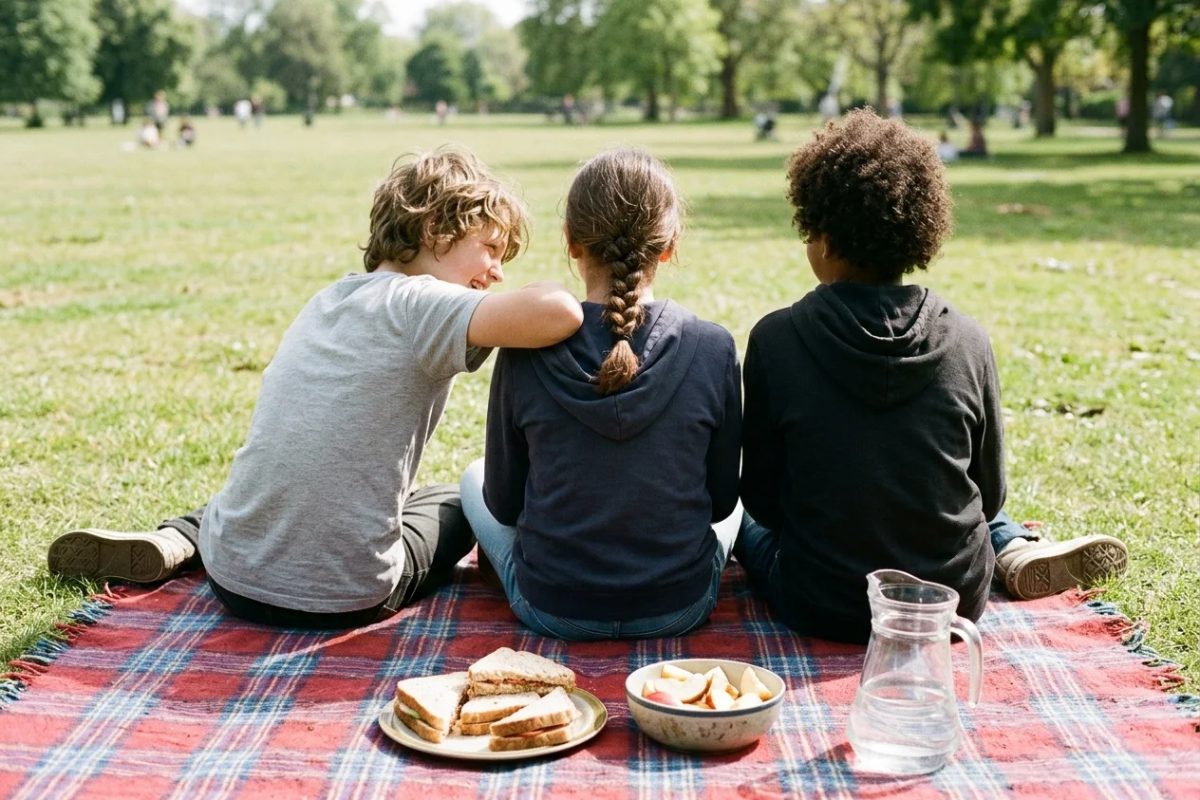
Your friend gets new trainers. They look amazing.
Another friend is top of the class at maths. Someone else scores every week at football.
You look down at your old shoes. A little voice says, "Everyone's better than me."
That voice is loud. But it's missing a lot of the story.
Why do I keep comparing?
Everyone does it. Your brain checks how you're doing by looking at the people around you.
Sometimes that helps. Seeing a friend ride a bike can make you want to learn. Other times it just makes you feel rubbish.
Is everyone else really happier?
Probably not. People mostly show the good bits. They keep the hard bits to themselves.
Scientists tested this with students. They guessed how often others felt sad or worried. They guessed too low.
The students who guessed lowest felt the loneliest. They thought they were the only ones having a hard time.
What about photos online?
People pick their best photo out of lots. Some use filters. Nobody posts the blurry one with their eyes half shut.
So you're putting your normal day next to someone's best second. That's a bit like comparing your rough plan with someone's finished picture.
How do I stop feeling rubbish?
Pick one of these.
- Compare you with you. Can you do something now that you couldn't do last year?
- Be glad for them. "Nice trainers!" It feels better than staying quiet and cross.
- Ask how they did it. Someone good at maths might show you a trick.
- Count your own good things. Think of 3 things you've got going for you.
Easy to get wrong
- Comparing your inside feelings with someone's outside. You can't see how they feel.
- Thinking more stuff means more happy. It often doesn't. The buzz of something new fades fast. Soon it just feels normal.
- Picking the one person who's best at everything. Nobody can win that game.
Everyone starts from a different place
Some families have more money. Some have less. Some people learn things fast. Some take longer. Some bodies run fast and some don't. Some people are new and still learning the language. That's all fine.
If comparing feels heavy, start small. Notice one thing you did better than last week. If you feel down about yourself a lot, tell a grown-up you trust. You can also find someone to talk to at findahelpline.com.
Questions you might have
Is comparing always bad?
No. Seeing someone do well can show you what's possible. It goes wrong when it makes you feel bad about yourself. Students who thought others never struggled felt lonelier in one test.
Why does everyone else seem happier?
Because they hide the hard bits. In one test, students guessed how often others had bad feelings. They guessed about 17 percent too low.
Do people notice what I wear?
Less than you think. In one test, people wore an embarrassing T-shirt. They thought about half the room noticed. Only about 1 in 4 did.
What if my family has less money?
Lots of families do. What people own doesn't show how kind or clever they are. In one test, teens who kept a thank-you diary wanted less stuff and gave more to others.
What if I'm jealous of my best friend?
That's a normal feeling. It doesn't make you a bad friend. Try saying "Well done" anyway. In one test, people felt closer when friends cheered their good news.
How can I feel better about myself?
Try counting good things. In one school test, students noted up to 5 good things a day for 2 weeks. They felt more hopeful and happier after.
Related topics
Likes, comparing and your mood · How you look · You are enough · Enough · Be yourself
Collect the Enjoy the ride cards10 cards for this rule. Tap, try it, collect it.See the cardsSources
- Jordan, Monin, Dweck, Lovett, John and Gross, "Misery has more company than people think: underestimating the prevalence of others' negative emotions", Personality and Social Psychology Bulletin, 2011, summarised by the British Psychological Society Research Digest, "Other people may experience more misery than you realise", 24 January 2011
- Gilovich, Medvec and Savitsky, "The spotlight effect in social judgment: an egocentric bias in estimates of the salience of one's own actions and appearance", Journal of Personality and Social Psychology, 2000
- Chaplin, John, Rindfleisch and Froh, "The impact of gratitude on adolescent materialism and generosity", The Journal of Positive Psychology, 2018, summarised by the University of Illinois, "Paper: Fostering gratitude reduces materialism, increases generosity in adolescents", 12 November 2018
- Gable, Reis, Impett and Asher, "What do you do when things go right? The intrapersonal and interpersonal benefits of sharing positive events", Journal of Personality and Social Psychology, 2004
- Froh, Sefick and Emmons, "Counting blessings in early adolescents: an experimental study of gratitude and subjective well-being", Journal of School Psychology, 2008
- Froh, "A lesson in thanks", Greater Good Magazine, 1 June 2007
This is part of Enjoy the ride, one of the 7 BELIEVE rules. Article 170 of 191.