Module 2. Staying safe Age 12+
Home alone
Being home on your own is a big step. A bit of planning makes it feel easy.
Draft. The BELIEVE team is still checking this page.
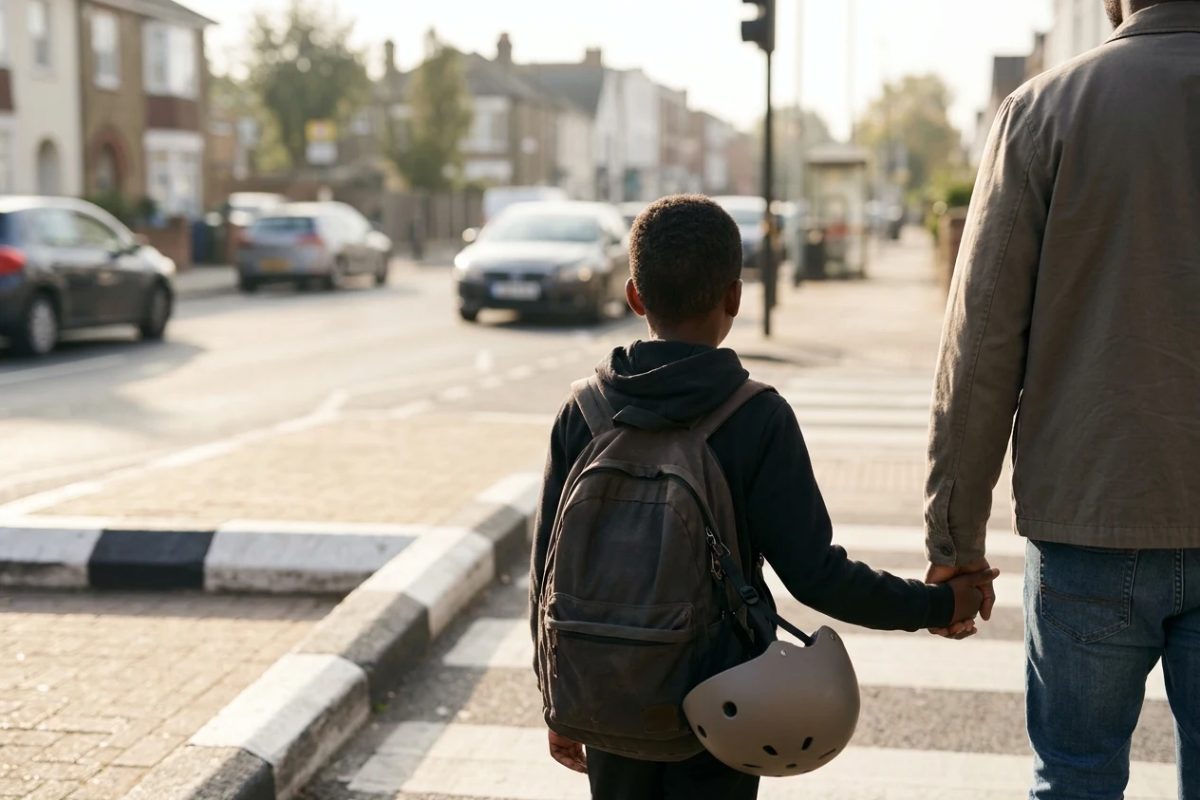
Your carer has popped out for an hour. It's the first time you've been home on your own.
At first it's brilliant. Nobody telling you what to do. The best seat on the sofa.
Then the doorbell rings. You weren't expecting anyone. Your stomach does a little flip.
Do you open it? Do you hide? Do you pretend nobody's in?
What rules should we agree?
Before your grown-up goes, sit down together and agree a few things.
- How long they'll be and when they'll be back.
- Whether friends can come round.
- What you can use, like the cooker, the kettle or the bath.
- Who to ring if something goes wrong.
Rules on the age for staying home alone differ by country. In some places it's left to families to decide. Your grown-up will decide when you're ready, and that's different for everyone.
What do I do if someone knocks?
You don't have to open the door. That's your choice, and it's a good one when you're on your own.
If you want to answer, talk through the door or a window. Don't say you're alone. Why? Someone up to no good is far less likely to try anything if they think a grown-up is in. Try "Mum's busy right now. Can you come back later?" Or "We're not taking deliveries today."
If someone won't go away or tries to get in, call the emergency number where you live (like 112, 999 or 911).
Can I use the cooker?
Only if your grown-up has said yes. If you do, stay in the kitchen the whole time. A pan left on its own can get dangerous fast. Hot oil can catch fire in a few minutes.
The World Health Organization lists hot drinks, hot liquids and unguarded cookers among the burn risks at home.
If you burn yourself, hold it under cool running water for 20 minutes. If a fire starts, get out, close the door behind you and call the emergency number from outside. A closed door slows down the fire and the smoke.
Who do I ring?
Write your list down on paper, even if you have a phone. Phones die. Paper doesn't.
Easy to get wrong
- Telling a caller you're on your own. Keep that to yourself.
- Posting online that your family's away. Wait until they're back. Anyone could see that your home is empty.
- Leaving a pan to answer a message. Turn the heat off first.
Everyone starts from a different place
Some people stay home alone a lot because their grown-ups work long hours. Some never do. Some look after younger brothers or sisters too, which is a big job. Some don't have a phone or a neighbour they know.
If you don't have a phone at home, agree which neighbour or shop you'd go to for help. Start with short times alone, like 20 minutes, and build up.
Questions you might have
Is there a legal age to stay home alone?
It depends on the country. Some places set an age in law. In the UK, for example, there's no set age. But it's against the law to leave someone alone if it puts them at risk. Ask your grown-up what applies where you live, and talk about when you both feel ready.
What if a delivery driver knocks?
You can leave it. Drivers can usually leave a card or try again. If you answer, talk through the door. You don't need to say you're alone.
How long should I cool a burn?
For 20 minutes, under cool running water. The NHS, the UK health service, says to start as soon as you can. Don't put butter, cream or oil on it.
What should I do if a pan catches fire?
Get out, close the doors behind you and call the emergency number from outside. Don't go back in. The World Health Organization lists unguarded cookers as one of the burn risks at home.
What if I feel scared on my own?
That's normal, especially the first few times. Ring someone on your list, put some music on or keep busy. Short times alone at first, like 20 minutes, help you build up.
What if the emergency call operator asks questions?
Answer them as clearly as you can. The European 112 group says to give your name, what happened and your location. Stay on the line until they tell you to hang up.
Related topics
In an emergency · First aid basics · First things to cook · Your trusted adults · Planning your own week
Collect the Be brave cards6 cards for this rule. Tap, try it, collect it.See the cardsSources
- World Health Organization, "Burns", fact sheet, 2026, checked 2026
- GOV.UK, "The law on leaving your child on their own", for the UK example, checked 2026
- NSPCC, home alone advice for parents, for no legal age in the UK and the risk rule, checked 2026
- NHS, "Burns and scalds", checked 2026
- EENA (European Emergency Number Association), "What's 112 all about?", checked 2026
- European Union, Your Europe, "Single emergency number - missing children helpline", checked 2026
This is part of Be brave, one of the 7 BELIEVE rules. Article 20 of 191.