Module 2. Staying safe All ages
In an emergency
Know your number, say where you're calling from and stay on the line.
Draft. The BELIEVE team is still checking this page.
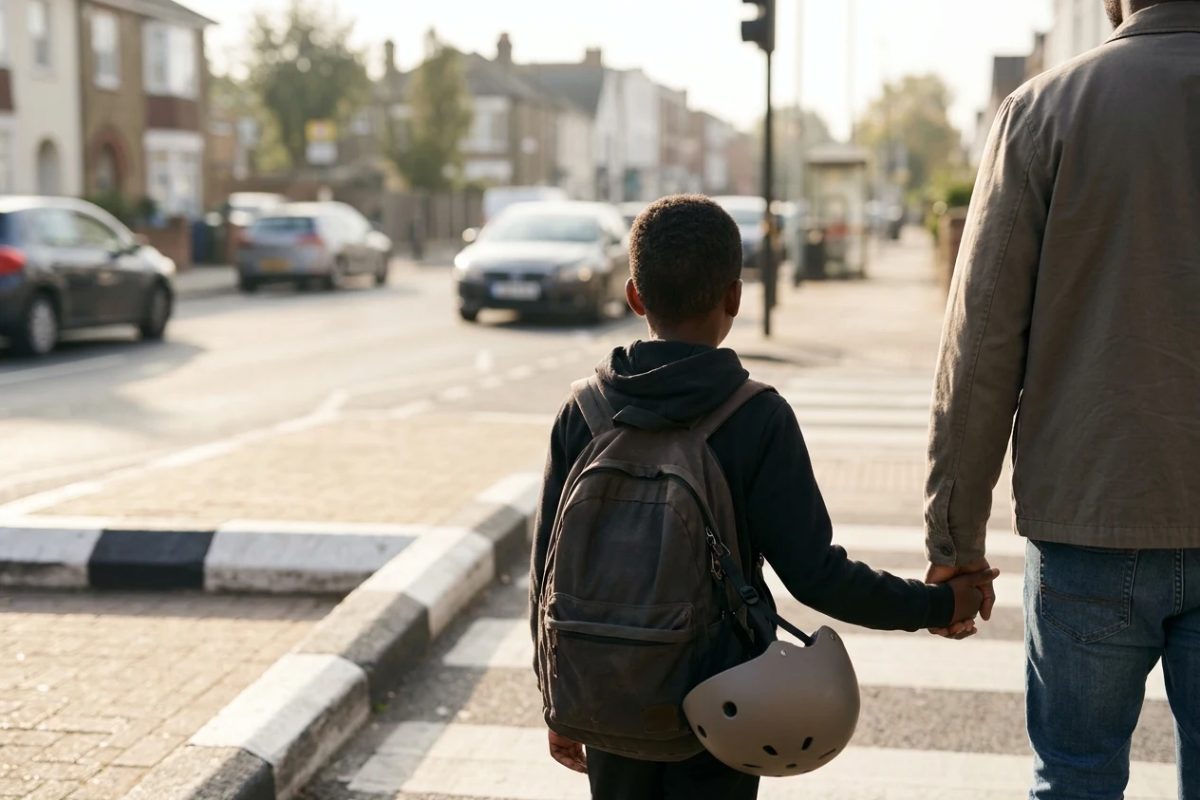
You're at home with your grandad. He's watching the football. You go to get a drink.
When you come back, he's on the floor. He won't wake up properly. Your heart is going like a drum.
What now?
The good news is that you only need three things. Your emergency number, your address and what happened. The person on the phone helps with the rest.
What's my number?
Every country has an emergency number. It's free to call. Here are some.
- 112 works across Europe and in lots of other places.
- 999 is used in the UK and some other countries.
- 911 is used in the US, Canada and some other countries.
Find out the one where you live. Ask a grown-up to check it with you today.
What counts as an emergency?
Someone is badly hurt or won't wake up. Someone can't breathe. There's a fire. Someone is in danger right now.
A lost toy or a broken phone isn't an emergency. If you're not sure, call anyway. The person who answers can help you work it out.
What do I say?
Pick up the phone and dial. Then try these.
- Say which help you need. Ambulance, fire or police.
- Say where you are. Your address, or what you can see around you. Help can't come until they know where to go.
- Say what happened. "My grandad fell and won't wake up."
- Stay on the line. Answer their questions. Only hang up when they say so. They might tell you how to help until help arrives.
How do I stay calm?
Your body might shake. Your voice might wobble. That's normal.
Try a slow breath out, like you're blowing on hot soup. Why? Slow breaths tell your body you're safe, so your heart slows down a bit. Then listen to the voice on the phone. They do this every day. They'll tell you what to do next, step by step.
Easy to get wrong
- Hanging up too soon. Wait until they tell you it's OK.
- Not knowing your address. Learn it by heart, including the town.
- Calling as a joke. It blocks the line for someone who really needs help.
Everyone starts from a different place
Some homes have a phone. Some don't. Some people find talking on the phone really hard. Some speak another language at home.
If there's no phone, run to a neighbour or a shop and ask them to call. If talking is hard, some countries have text or sign language options. Ask a grown-up to find out what works where you live.
Questions you might have
Does it cost anything to call?
No. In every country in the EU, you can call 112 for free from a landline or a mobile. The 112 line also runs day and night, every day of the year.
What if I don't know the address?
Say what you can see. A shop name, a park, a bus stop or a big building helps. The European 112 group says to give your location the best way you can.
What if I get scared and can't talk?
Stay on the line. Breathe out slowly and try again. The person on the phone is trained for this. If you can, give the phone to a grown-up nearby.
Should I hang up if they go quiet?
No. Wait. The European 112 group says to stay on the line until the operator tells you to hang up. Calling back puts you at the back of the queue.
When did emergency numbers start?
The first one in the world was 999. It started in London on 30 June 1937, after a fire. Now countries all over the world have one.
Will I get in trouble if it wasn't really an emergency?
Not if you really thought it was. The people who answer would much rather you called. Only prank calls are a problem. They stop real calls getting through.
Related topics
Your trusted adults · First aid basics · Home alone · Out and about · Asking for help
Collect the Be brave cards6 cards for this rule. Tap, try it, collect it.See the cardsSources
- European Union, Your Europe, "Single emergency number - missing children helpline", for 112 being free from fixed and mobile phones in all EU countries, checked 2026
- EENA (European Emergency Number Association), "What's 112 all about?", for 24/7, giving your location, staying on the line and repeat calls going to the end of the queue, checked 2026
- Greater London Authority, City Hall blog, "999 celebrates its 77th birthday", for the first 999 call in London on 30 June 1937 after the 1935 Wimpole Street fire, checked 2026
This is part of Be brave, one of the 7 BELIEVE rules. Article 14 of 191.