Module 2. Staying safe All ages
Out and about
Go out, have fun and come home in one piece.
Draft. The BELIEVE team is still checking this page.
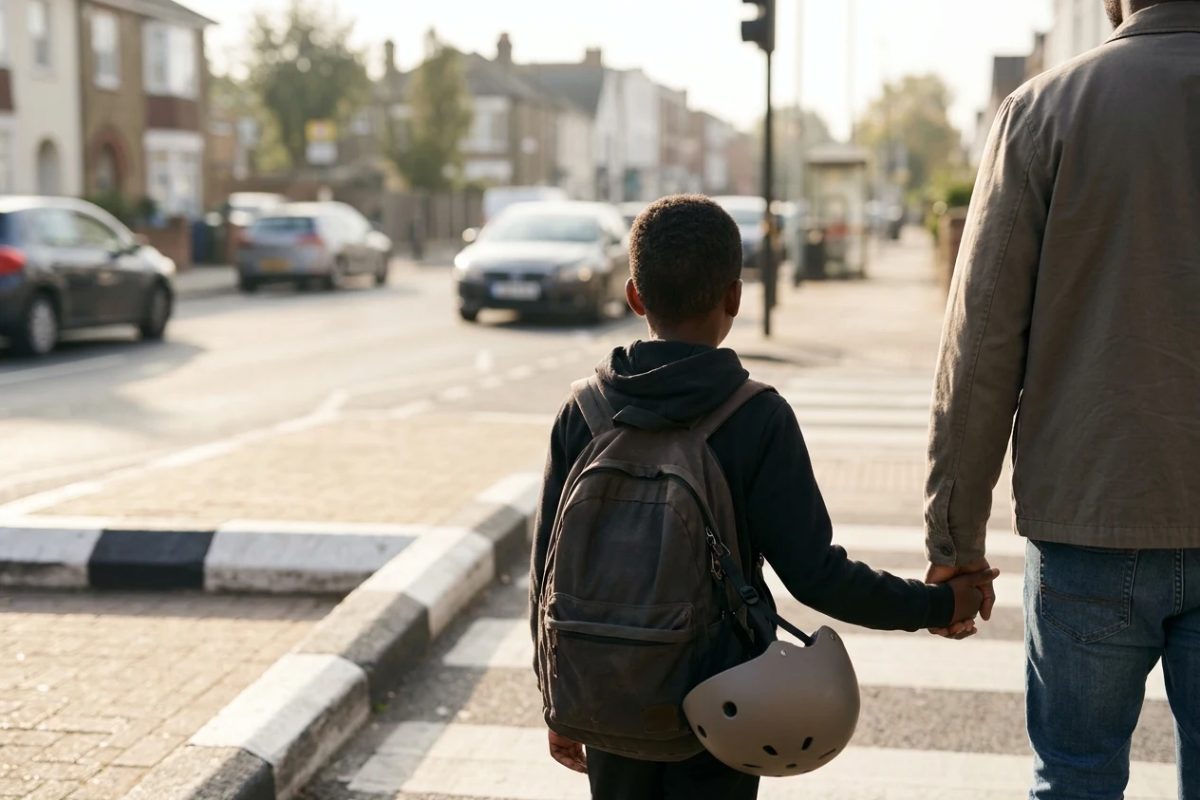
It's a sunny Saturday. You and your cousin are off to the park. Bikes, a ball and a bag of snacks.
There's a busy road on the way. Then a pond with ducks. Then a huge crowd at the ice cream van.
Your cousin turns round. "Where's your little brother?"
Being out is brilliant. A few simple habits keep it that way.
How do I cross the road?
- Stop. Wait at the edge of the path, not in the road.
- Look and listen. Check both ways. Some cars and bikes are very quiet.
- Wait for a gap. Cross when nothing is coming. Use a crossing if there is one.
- Keep looking. Walk straight across. Don't run and don't stare at a screen.
Remember that cars drive on the left in some countries and on the right in others. On holiday, look both ways twice.
What about bikes and scooters?
Wear a helmet that fits snugly. It should sit low on your forehead, not tipped back. Tipped back, it leaves the front of your head with nothing to protect it. Bright clothes help drivers see you, and lights help at night.
Rules for bikes and electric scooters are different in each country. Some places set an age limit for electric scooters. Ask a grown-up what the rules are where you live.
Is water dangerous?
It can be. Water looks calm but can be cold, deep and fast.
Swim where there's a lifeguard if you can. Go with a grown-up. Stay away from edges of rivers, canals and ponds when they're slippery.
If you fall in, try to lie back and float. Why? Cold water makes you gasp. Floating gives your breathing time to settle. Then shout or wave for help. If you see someone else in trouble, don't jump in. The water that caught them can catch you too. Shout for a grown-up and call the emergency number where you live (like 112, 999 or 911).
What if I get lost?
Stop where you are. Your grown-up will come back to look for you. It's easier to find someone who stays still.
Then look for a safe person to ask. Someone working there, like a shop worker or a guard. A mum or dad with a pram is a good choice too.
Easy to get wrong
- Crossing between parked cars. Drivers can't see you there.
- Wearing a helmet on the back of your head. It needs to cover your forehead.
- Walking off to look for your grown-up when you're lost. Stay put.
Everyone starts from a different place
Some people live by busy roads. Some live by the sea. Some don't have a bike. Some use a wheelchair or can't hear traffic well. Some haven't learned to swim yet.
Start with the bit that fits your life. Learn one phone number. Practise one safe crossing on your way to school.
Questions you might have
Why does water need so much care?
Drowning is the third biggest cause of death for people aged 5 to 14. That's from the World Health Organization. Safe swimming spots and grown-ups nearby make a big difference.
Should I learn to swim?
If you get the chance, yes. The World Health Organization says teaching basic swimming and water safety is one way to stop drowning. Even floating on your back is a great skill to learn.
Why do I need to look and listen?
Some cars and bikes are really quiet. Listening and looking gives you two ways to spot them. The World Health Organization says safe crossing points also help keep walkers safe.
What if a stranger offers to help when I'm lost?
Choose who you ask. Someone working there or a mum or dad with a pram are good picks. Stay in a busy place where other people can see you.
Does speed matter for people crossing?
Yes, a lot. Think of a car going at 65 km per hour. A walker it hits is about 4 times more likely to die than at 50. The World Health Organization says so. That's why slow roads near schools help.
Do I need a helmet on a scooter?
It's a good idea on any bike or scooter. A helmet protects your head if you fall. Rules about helmets differ by country. Ask a grown-up what applies where you live.
Related topics
In an emergency · Getting around on your own · Being outdoors · Your trusted adults · Travelling
Collect the Be brave cards6 cards for this rule. Tap, try it, collect it.See the cardsSources
- World Health Organization, "Drowning", fact sheet, 2026, for third leading cause of death at ages 5 to 14 and teaching swimming, checked 2026
- World Health Organization, "Road traffic injuries", fact sheet, 2026, for leading cause of death at ages 5 to 29, safe crossing points and risk rising 4.5 times from 50 to 65 km/h, checked 2026
- RNLI, "Float to Live", for floating on your back if you fall in, checked 2026
- European Union, Your Europe, "Single emergency number - missing children helpline", checked 2026
This is part of Be brave, one of the 7 BELIEVE rules. Article 15 of 191.