Module 2. Staying safe Age 10+
Dares and pressure from friends
Saying no to a dare can be the bravest thing you do all day.
Draft. The BELIEVE team is still checking this page.
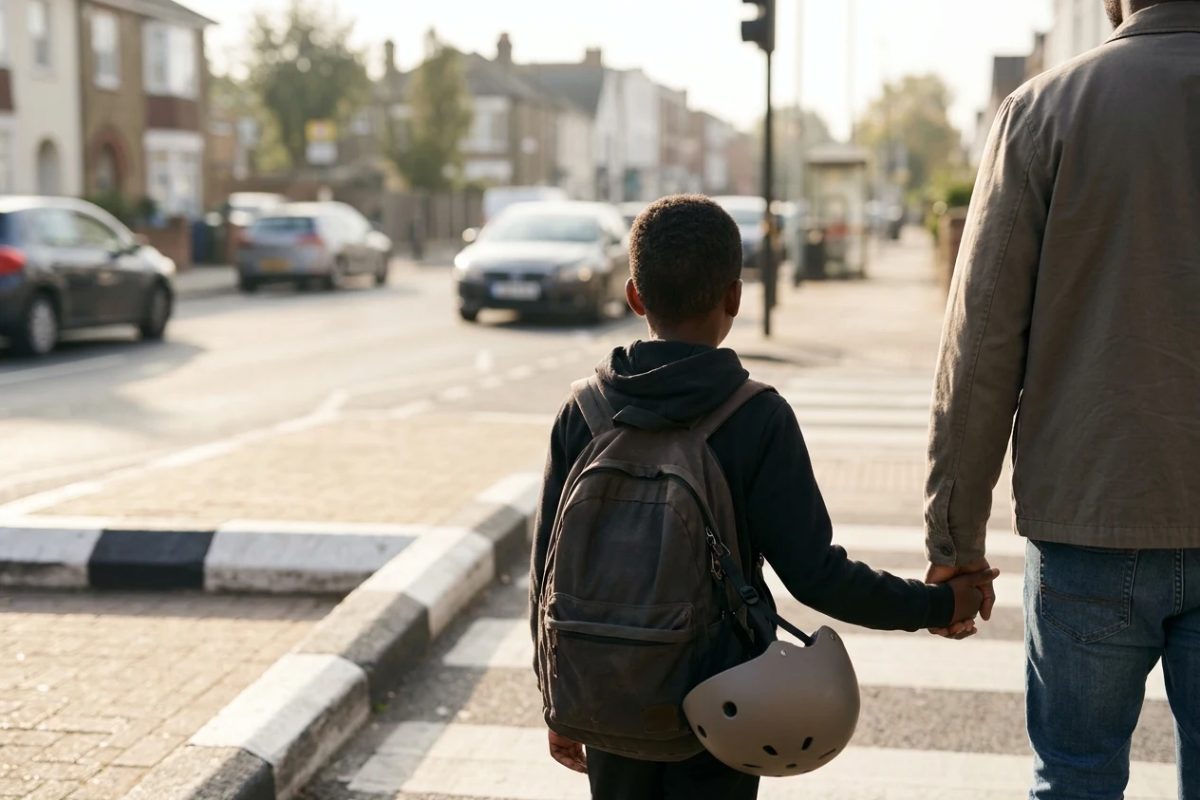
It's after school. You and your friends hang around by the shops.
Someone points at the wall by the car park. "Bet you can't jump off that."
It's high. Really high. Everyone turns to look at you. Someone starts a slow clap.
Your legs say no. Your head says "but they'll laugh." What do you do?
Why is it so hard to say no?
Your brain loves fitting in. That's normal. Being part of a group feels good and safe.
Scientists tested this with a driving game. Teenagers took more risks when their friends were watching. Grown-ups didn't change much. The part of the brain that loves rewards lit up more when friends were there.
So you're far from the only one. Pressure is real. Knowing that helps you spot it.
Why does it get easier as you grow? The part of the brain that stops and thinks is still being built. It keeps growing until your mid-twenties.
What counts as pressure?
Sometimes it's loud. "Go on! Do it! Chicken!"
Sometimes it's quiet. A look. A laugh. Being left out of the chat if you don't join in.
Both kinds can make you do things you don't want to do.
How do I get out of it?
Pick one of these.
- Keep it short. "Nah, I'm good." You don't need to explain.
- Blame a grown-up. "My mum would go mad." It works almost every time. Nobody can argue with a rule that isn't yours.
- Change the plan. "That's boring. Let's go to the park instead."
- Walk away. You can just go. Real friends will still be your friends tomorrow.
What if it's dangerous?
If someone could get hurt, it's OK to tell a grown-up you trust. That's looking out for your friends.
If someone is already hurt, call the emergency number where you live (like 112, 999 or 911). Is pressure from friends getting you down? Talk to a grown-up you trust. Or find a helpline at findahelpline.com.
Easy to get wrong
- Thinking a good friend would push you. Good friends take no for an answer.
- Giving a long speech. A short "no thanks" works better. Every extra reason is something for them to argue with.
- Joining in when someone else is being pushed. Backing them up makes it easier for both of you.
Everyone starts from a different place
Some people find saying no easy. Some worry a lot about what others think. Some are new to a group and really want to fit in. All of that makes sense.
If "no" feels too big, start smaller. Say "maybe later" and walk off. Or stick next to the one friend who usually says no too.
Questions you might have
Why do I do silly things when friends watch?
Your brain is wired to care what friends think. In one driving game test, teenagers took more risks when friends were watching. Adults didn't. That pull gets less strong as you grow up.
Is my brain still growing?
Yes. Doctors at the US health agency, the CDC, say the brain keeps developing until around age 25. So finding big choices tricky sometimes is normal.
Will people think I'm boring if I say no?
Most won't remember by tomorrow. In one test, people wearing a silly T-shirt thought half the room noticed. Only about 1 in 4 did. Everyone is busy thinking about themselves.
What if my whole group is doing it?
You can still say no. In the driving game test, friends watching made teenagers take more risks. Nobody even asked them to. Just knowing that pull is there helps you stand firm.
What if they keep going on about it?
Then it's pressure, and it's OK to get help. Tell a grown-up you trust. If it carries on, it might be bullying. You can find a helpline at findahelpline.com.
Can I pretend I'm not allowed?
Yes. Blaming a grown-up is a classic way out. "My dad checks everything" or "I'd be grounded" gives you an easy exit. Most grown-ups are happy to be the bad guy.
Related topics
Saying no · Thinking for yourself in a crowd · Being a good friend · Friendship groups and group chats · Standing up for someone
Collect the Be brave cards6 cards for this rule. Tap, try it, collect it.See the cardsSources
- Chein, Albert, O'Brien, Uckert and Steinberg, "Peers increase adolescent risk taking by enhancing activity in the brain's reward circuitry", Developmental Science, 14(2), 2011
- CDC, "Cannabis and Teens", for the brain developing until about 25, checked 2026
- Gilovich, Medvec and Savitsky, "The spotlight effect in social judgment: An egocentric bias in estimates of the salience of one's own actions and appearance", Journal of Personality and Social Psychology, 78(2), 2000
- Find A Helpline, checked 2026
This is part of Be brave, one of the 7 BELIEVE rules. Article 17 of 191.