Module 2. Staying safe All ages
Roads, bikes and scooters
Roads are where most accidents happen, so cross carefully, be seen and wear a helmet.
Draft. The BELIEVE team is still checking this page.
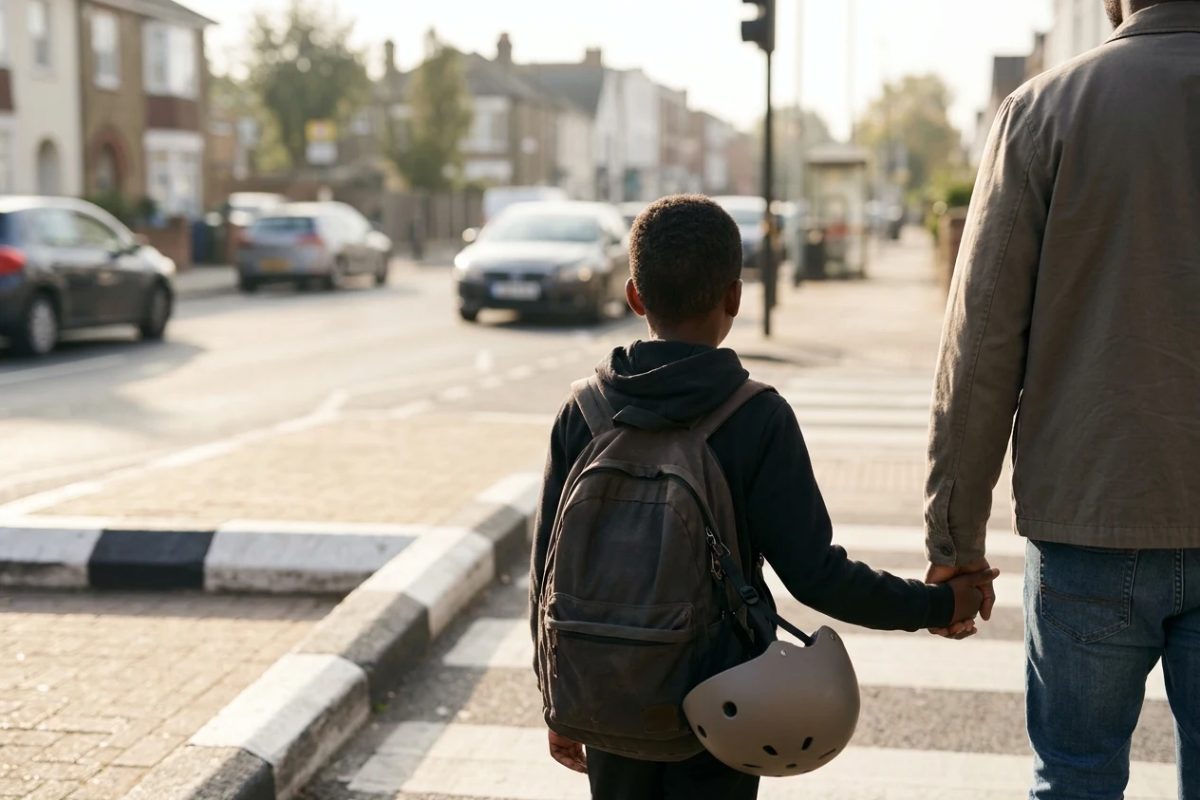
You're late. The bus is pulling in on the other side of the road.
Your friend shouts, "Run!" You step off the kerb between two parked vans.
A car you couldn't see brakes hard. It stops just in time.
Your heart is going like mad. That was close. And it happened in 2 seconds.
Why are roads such a big deal?
Because around the world, road accidents are the biggest danger to people aged 5 to 29. More than drowning. More than illness.
Cars are big, heavy and fast. A driver needs time and space to stop. People on foot, bikes and scooters have nothing around them to soak up a crash.
Why is it hard to judge cars?
Judging how fast a car is coming takes years to learn. Your brain is still getting the hang of it. So a car can be closer and faster than it looks.
Phones and headphones make it worse. Your eyes and ears are busy, so you miss things.
How do I cross safely?
- Find a safe place. A crossing, a bridge or a spot where you can see far both ways.
- Stop at the edge of the path.
- Look and listen both ways. Take your headphones out.
- Wait for a gap. Then walk straight across. Keep looking.
Stay away from crossing between parked cars. Drivers can't see you there.
Why wear a helmet?
Because your head is the part most likely to get badly hurt in a bike crash. Scientists looked at lots of crashes. Wearing a helmet cut the risk of a head or brain injury by about two thirds.
Make sure it fits. It should sit level, just above your eyebrows, with the strap done up.
How can I be seen?
Bright colours in the day. Lights and something shiny at night. If a driver can see you sooner, they can stop sooner.
Easy to get wrong
- Thinking drivers can always see you. Often they can't.
- Racing across because everyone else is. Wait for your own gap.
- Wearing a helmet loose or unclipped. It only works when it's done up.
Everyone starts from a different place
Some people live on busy roads with no crossings. Some don't have a bike or helmet. Some use a wheelchair. Rules for bikes and scooters also differ by country. Ask a grown-up what applies where you live.
Start with one safe route you use a lot. Practise it with a grown-up until you know every tricky bit.
Questions you might have
What's the biggest danger for people my age?
Road accidents. The World Health Organization says they're the leading cause of death for people aged 5 to 29 worldwide. Most happen to people walking or on bikes.
Do helmets really work?
Yes. Scientists looked at lots of crashes. Helmets cut the risk of head and brain injury by about two thirds. That's true even when a car was involved.
Are electric scooters safe?
They can be fast and hard to see. Laws on who can ride them, and where, are very different in different countries. Check the rules where you live.
Why can't I use my phone when I cross?
Your eyes and ears are busy, so you can miss a car. Even a few seconds looking down can matter. Phone away, look up, then cross.
Does wearing bright clothes help?
Yes. Bright colours in the day and lights or shiny strips at night help drivers see you sooner. Sooner means more time to stop.
What if I see a crash?
Keep yourself safe first. Then call the emergency number where you live, like 112, 999 or 911. Tell a grown-up straight away.
Related topics
Out and about · Water safety and swimming · Getting around on your own · In an emergency · First aid basics
Collect the Be brave cards6 cards for this rule. Tap, try it, collect it.See the cardsSources
This is part of Be brave, one of the 7 BELIEVE rules. Article 187 of 191.